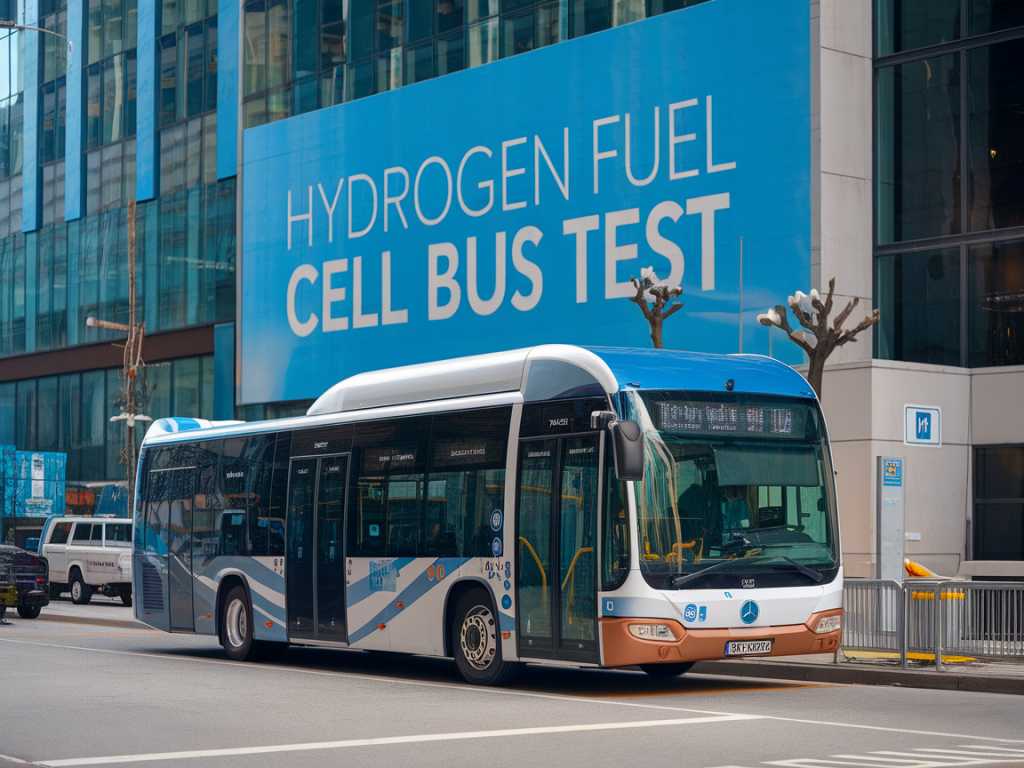
As someone who watches urban mobility closely, I often get asked whether hydrogen fuel-cell electric buses (FCEBs) are a realistic operational alternative to battery-electric buses (BEBs) on high‑frequency urban routes. After visiting depots, talking to operators in Europe and Asia, and reviewing recent trials, I’ve come to see that the answer isn’t binary. Each technology brings different operational gains — and different trade-offs — depending on route intensity, depot infrastructure, energy supply, and financial constraints. Here’s a practical, experience‑based look at where hydrogen fuel-cell e-buses can outperform battery buses on high-frequency services.
Refueling speed and vehicle turnaround
One of the clearest operational advantages of hydrogen FCEBs is refueling time. For high-frequency routes where buses return to the depot for short layovers rather than long charging sessions, hydrogen behaves much like diesel in terms of refuel time: tanks can be topped in roughly 10–20 minutes. In contrast, most depot-based BEB strategies require multi-hour overnight charging or opportunity charging at termini using high-power chargers.
That refueling parity matters operationally:
Short layover operations: Hydrogen allows buses to re-enter service quickly during peak periods without needing dedicated high-power chargers at the terminus.Driver schedules and duty cycles remain straightforward because refuel stops match established refueling patterns.Fleet utilization increases — fewer vehicles are needed to maintain headways if each vehicle can be refueled rapidly.Range and route intensity
Another practical edge is range consistency. Modern FCEBs often deliver ranges comparable to diesel equivalents (300–450 km depending on conditions), and crucially, range doesn’t degrade as sharply under continuous heavy duty cycles or cold weather as some battery systems do.
On high-frequency routes with constant stop-and-go operations, heating or air‑conditioning demands, or hilly terrain, BEB range can be more variable, forcing operators to either install on-route high-power opportunity chargers or schedule more frequent reliefs. Fuel-cell buses reduce that operational complexity.
Depot and infrastructure flexibility
Installing a hydrogen refueling station at a depot is a different proposition than wiring up dozens of high-power chargers. The differences lead to tangible operational impacts:
Space constraints: High-power charging infrastructure (e.g., 300–600 kW chargers) needs substantial electrical upgrades and sometimes extra space for chargers at termini. Hydrogen refueling equipment can be more compact in footprint, though it requires gas handling safety zones.Grid capacity: High-frequency BEB fleets require hefty grid connections, often triggering costly upgrades and lengthy permitting. Hydrogen depots shift energy demand to hydrogen production and storage systems, reducing immediate grid stress but adding complexity in fuel supply logistics.Scalability: Expanding BEB charging capacity typically means incremental electrical upgrades. Expanding hydrogen capacity can be as simple as additional storage and additional dispenser points if hydrogen supply is secured.Operational resilience and scheduling
From an operator’s scheduling perspective, hydrogen buses can improve resilience:
Less vulnerability to grid outages: If a depot loses power, BEBs are stuck without energy unless backup storage exists. Hydrogen refueling (assuming hydrogen delivered or produced independently) can continue, or at least be less affected by local grid issues.Fewer vehicles held in reserve: Because refueling is fast and range is steady, fleets can run leaner — fewer spare buses are needed to cover the same high-frequency service.Predictable duty cycles: Simpler, more diesel-like refueling patterns reduce the risk of missed trips due to undercharged batteries on long, busy days.Maintenance profiles and downtime
Hydrogen fuel cell buses are electric drivetrains at their core, which means lower mechanical maintenance than diesel. Compared with BEBs, maintenance profiles are nuanced:
Battery degradation & replacements: BEBs carry large battery packs whose capacity gradually diminishes. In high‑frequency use cases with fast charge duty cycles, battery replacements can become a significant lifecycle cost and source of downtime.Fuel cell system maintenance: Fuel cell stacks and hydrogen storage systems need specialized maintenance and periodic component replacement, but they won’t face the same large‑scale pack swaps. Operators have reported predictable maintenance intervals for stacks (with warranties often guaranteeing several years of operation).Workshop skills: Hydrogen systems require additional staff training and safety procedures. That overhead can be offset by fewer battery‑related service interventions if the alternative is heavily utilized BEBs.Daily operational cost and total cost of ownership (TCO)
TCO comparisons are location‑specific, but there are operational considerations that can create gains for hydrogen on high-frequency routes:
Energy uptime and productivity: Faster refuels and fewer mid-day operational constraints can translate into higher kilometers per bus per day, improving revenue potential per asset.Fuel pricing volatility vs electricity: Depending on hydrogen production pathways (green hydrogen from electrolysis vs grey hydrogen from reforming), fuel cost can be higher or lower than electricity. But operationally, the ability to buy or produce hydrogen when prices are favourable and store it on site provides flexibility.Infrastructure amortization: For very intensive routes, the capital cost of massive depot charging infrastructure per bus can be higher than building a hydrogen refuelling setup shared across a busy fleet.When battery buses can still win
I’m careful not to oversell hydrogen. There are many cases where BEBs are operationally superior:
Short routes and overnight charging: Routes with predictable overnight layovers and lower daily mileage suit battery buses perfectly.Availability of renewable electricity and low grid upgrade costs: Where grid capacity is available and cheap renewable electricity is abundant, BEBs can have lower lifecycle emissions and energy costs.Simpler safety and regulatory regimes: Electric charging is a simpler regulatory environment than hydrogen handling in many jurisdictions.Real-world examples and lessons
From what I’ve seen in cities like Aberdeen, Tokyo, and several German pilot projects, patterns emerge:
High-frequency airport shuttle or trunk routes — where buses run long hours with minimal downtime — are prime candidates for hydrogen because refuelling fits operational patterns and high utilization amplifies the benefit of quick refuels.Hybrid depot strategies can be effective: some operators run BEBs on lower-intensity feeders and FCEBs on trunk high-frequency routes, leveraging each technology where it shines.Local hydrogen supply matters: when green hydrogen production is local or hydrogen supply chains are mature, the operational gains translate into clearer environmental wins as well.| Operational Aspect | Hydrogen Fuel‑Cell Buses | Battery Electric Buses |
|---|
| Refueling/charging time | 10–20 minutes | 30 minutes to several hours (unless ultra-fast opportunity charging) |
| Range stability under heavy use | High | Variable, affected by temperature and charging profile |
| Depot grid requirements | Lower | High (may need upgrades) |
| Maintenance related to energy storage | Fuel cell stack maintenance | Battery degradation & potential pack replacements |
| Best use case | High-frequency trunk routes, long duty cycles | Shorter routes, overnight-charged fleets |
In short, hydrogen fuel-cell e-buses offer operational gains in refueling speed, range consistency, depot flexibility, and resilience — gains that particularly matter on high‑frequency urban routes where uptime and predictable duty cycles drive service quality. The decision for operators often comes down to local energy economics, depot constraints, and long‑term sustainability goals. Personally, I’m excited by seeing mixed-fleet strategies emerge: they reflect a pragmatic approach to achieving decarbonization without compromising service reliability.