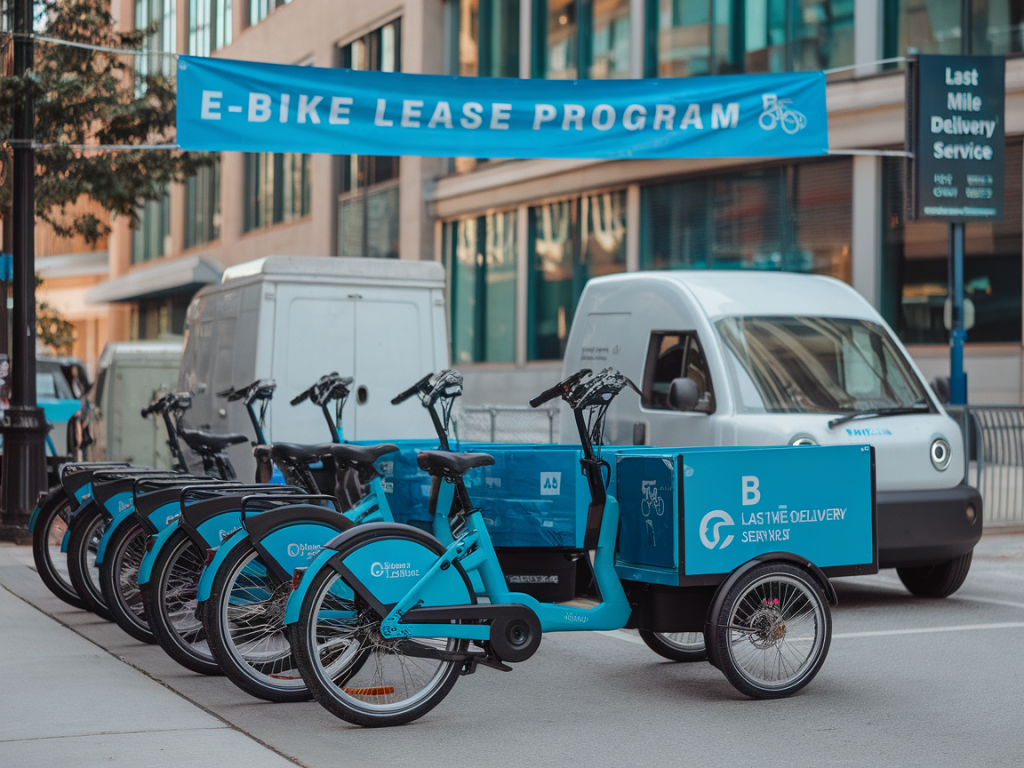
When I first started following the shift to micromobility solutions for urban logistics, cargo e-bikes felt like a niche curiosity. Fast forward a few years, and they're increasingly visible: zipping down bike lanes, stationed at micro-hubs, and replacing small vans on narrow streets. One thread I'm watching closely is citywide battery leasing for cargo e-bikes — a model that could address some of the biggest operational hurdles for riders and operators. The big question I'm exploring today is: can this approach undercut small electric vans for same-day last-mile deliveries?
What do we mean by citywide battery leasing for cargo e-bikes?
In simple terms, battery leasing means riders or logistics companies lease batteries separately from the bike. A citywide system implies a network of swap or charging stations across an urban area where batteries can be picked up, swapped, or returned. Think of it like shared battery depots that any participating courier or platform can access.
Advantages here include reduced upfront costs for bikes, lighter vehicles (because you can design them without large integrated battery packs), and the ability to keep bikes in service by swapping depleted batteries for charged ones in minutes rather than waiting hours to recharge.
Why is this model attractive for last-mile delivery?
From my conversations with fleet managers and couriers, three pain points keep surfacing:
- Downtime: Waiting for batteries to charge or returning to a central depot kills productivity.
- Cost and capital: High-capacity integrated batteries are expensive and degrade over time, saddling operators with replacement costs.
- Range anxiety: Even though many urban routes are short, unknown peak loads, weather, or hilly terrain can limit daily range.
Citywide battery leasing can alleviate each problem: quick swaps minimize downtime, spreading battery costs across users reduces capital expenditure, and swap density reduces range anxiety since charged batteries are always nearby.
How does this compare to small electric vans?
Small electric vans (think compact LCVs like the Mercedes eVito or Renault Kangoo Z.E.) remain attractive for larger payloads and in situations where weather protection or large-volume storage is essential. But vans come with disadvantages in dense city centers: parking and curb access are more constrained, energy consumption is higher, and operating costs can be significant.
In comparing the two, it's useful to look across several dimensions:
| Dimension | Cargo E-bikes + Battery Leasing | Small Electric Vans |
|---|---|---|
| Initial capital | Lower for bikes; battery leasing spreads cost | Higher vehicle purchase/lease costs |
| Operating costs | Lower (cheaper energy per km, lower parking fees), but depends on swap pricing | Higher energy and maintenance costs; potential congestion charges |
| Speed/door-to-door time in dense areas | Faster on short trips, avoids traffic; better curb access | May be slower due to traffic and parking |
| Payload/volume | Limited; ideal for up to ~200–400 kg and compact items | Higher volume and payload capability |
| Environmental impact | Lower lifecycle emissions per delivery, depending on battery source | Higher, though still better than ICE alternatives |
What are the economics of battery leasing?
Operators will ask: does leasing actually save money? My quick breakdown:
- Upfront savings: Leasing removes a large one-time battery cost, letting fleets scale faster.
- Predictable OPEX: Monthly swap or subscription fees convert unpredictable replacement cycles into predictable costs.
- Shared pool efficiency: Batteries in a swap ecosystem are used more intensively, improving utilization rates and reducing per-kWh cost if managed well.
However, the devil is in the details: swap pricing, station density, and battery lifecycle management determine net savings. If swap fees are too high or stations are poorly distributed, the economic advantage erodes quickly.
Operational and technical challenges
From my field interviews and pilot program reviews, several practical hurdles stand out:
- Standardization: Without a common battery design, operators face fragmentation. Initiatives like Bosch's standardized e-bike battery ecosystems help, but many cargo e-bike makers use proprietary packs.
- Infrastructure rollout: Cities need to host swap or charging points. This requires space, power supply, and ongoing maintenance — plus partnerships between municipalities, utility companies, and private providers.
- Battery health management: Tracking state-of-health is crucial to ensure safety and optimize replacement cycles. That needs connected batteries and robust telemetry systems.
- Behavioral adoption: Couriers must change routines — swapping mid-shift, trusting shared batteries, and potentially altering route planning around swap points.
Are there successful examples?
Yes, there are promising pilots and commercial operations. Companies like Swapfiets for consumer bikes have popularized subscription models, and some logistics startups in Europe and Asia run local swap networks for delivery riders. I’ve observed pilots where grocery delivery platforms integrate swap points at micro-hubs near dense residential areas, achieving near-van delivery times for small orders.
Another interesting model is hybrid: combining small electric vans for bulk or consolidation runs to neighborhood micro-hubs, then using swapped cargo e-bikes for the final-mile drops. This leverages both modalities' strengths.
What about environmental and policy implications?
From an urban planning perspective, many cities prefer solutions that reduce congestion and emissions. Cargo e-bikes are a clear win here, and a battery leasing model that increases bike availability and reduces wasteful replacement cycles can strengthen that case.
Policy levers that encourage adoption include:
- Subsidies or grants for swap-station deployment
- Regulatory support for standardization and interoperability
- Parking and curb-priority for micro-hubs
- Incentives to ensure batteries are recycled responsibly
Who benefits — and who loses?
Winners: urban residents (less noise and congestion), couriers (higher utilization and lower operational costs), city planners (fewer vans clogging streets), and companies offering swap platforms.
Losers: traditional last-mile operators that rely on vans for every delivery, unless they adapt to multimodal models. There are also incumbents in the battery manufacturing and servicing chains that must evolve to support shared pool maintenance.
Key questions operators should ask before switching
- What is our average payload and parcel size? Do cargo e-bikes cover most of our deliveries?
- Where are our densest delivery clusters, and can we place swap stations within a 3–5 minute detour of those routes?
- What will swap pricing look like over a 3–5 year horizon, including battery replacement and recycling costs?
- Can we partner with local authorities or other platforms to share swap infrastructure and standards?
- How will we handle battery health, theft prevention, and traceability?
As someone who studies mobility trends, I find the battery leasing model compelling — especially in dense urban cores where speed, agility and low operational cost trump raw payload. But it's not a silver bullet. For many delivery businesses, the optimal setup will be hybrid: micro-hubs, small vans for bulk movement, and fleets of swapped cargo e-bikes for the final leg.
If cities and private operators can align on standardization, smart pricing, and infrastructure placement, citywide battery leasing could indeed undercut small electric vans on many same-day deliveries — not by replacing vans entirely, but by reshaping the last mile into a more efficient, multimodal system that leverages the strengths of each vehicle type.