I remember the first time the phrase report du contrôle technique pour les motos started appearing in headlines and forums: a mix of relief, confusion and a thousand practical questions for riders. As someone who follows mobility policy and its implications closely, I’ve tracked the debate, read the official texts, and talked with mechanics and fellow riders. In this article I’ll walk you through what the postponement means, who it affects, the deadlines to watch, practical steps to take, and why this topic matters beyond bureaucracy — for safety, costs and long-term regulation of two-wheel mobility.
What exactly is meant by postponing the motorcycle inspection?
In plain terms, the phrase refers to an official postponement (report) of the planned mandatory technical inspection (contrôle technique) for motorcycles. Governments periodically introduce or delay vehicle inspection regimes. When authorities announce a report, they usually shift the implementation date or temporarily suspend enforcement. The reasons can range from administrative delay to industry lobbying or technical readiness concerns.
To see one discussion summarizing the postponement and public reaction, read this piece linking policy and industry context: report du contrôle technique pour les motos. That link gives a snapshot of how the debate unfolded in France — a useful case study for riders elsewhere.
Why was the control inspection for motorcycles postponed?
- Administrative and logistical challenges: Setting up inspection centers, training examiners and designing motorcycle-specific protocols takes time.
- Technical debates: Motorcycles present different inspection needs (e.g., noise, emissions, steering geometry) than cars; consensus on test methods can be slow.
- Political and industry pushback: Riders’ unions, dealers and small garages often lobby against sudden obligations that increase costs.
- Public health/emergency reasons: In exceptional times (pandemics, national crises), non-essential procedures can be temporarily postponed.
Who is impacted by the postponement?
Short answer: most riders who would have faced the first mandatory inspection during the postponed period. More precisely:
- Owners of motorcycles due for an initial or periodic inspection in the affected window.
- Independent garages and inspection centers preparing to offer motorcycle checks.
- Insurance companies and second-hand buyers concerned about vehicle history.
For example, if initial policy planned inspections for motorcycles over a certain age starting January 2026 but the government delayed to 2027, owners who bought or registered bikes before that enforcement date may have their first mandatory check deferred accordingly.
Key dates and timeframes to track
Authorities typically publish a schedule detailing phase-in timelines. Here’s how I recommend you monitor dates:
- Official government transport websites (primary source).
- National motoring or motorcycling federations.
- Major automotive press outlets and industry associations.
Practical tip: bookmark the transport ministry page of your country and sign up for alerts from a riders’ association. In France, for instance, updates appear on government portals and in outlets such as Le Monde or specialized sites like Auto-Moto.
Practical steps for riders during a postponement
- Don’t skip basic maintenance: The postponement is administrative — it does not reduce the safety need for regular checks on tires, brakes, lights and suspension.
- Keep documentation updated: Service records, invoices and any voluntary inspections are useful for resale or insurance claims.
- Plan financially: Use the extra time to budget for the inspection cost (typically between €50–€120 in many EU countries) and potential repairs.
- Consider voluntary inspection: Some riders opt for paid voluntary checks at private garages to prepare their bike.
- Watch resale timing: If you plan to sell, a valid technical inspection can increase buyer confidence and resale value.
Costs, fines and insurance — what changes with the postponement?
The postponement usually means no fines will be enforced for missing the newly postponed deadline, but the practical impact varies by country and insurer. A few important points:
- Insurance contracts rarely change automatically; an inspection can still affect a claim if the bike was known to be unsafe.
- Fines for non-compliance typically apply only after enforcement restarts.
- Some owners face storage or operational costs if they choose to service their bike before the inspection window.
Safety statistics and why inspections matter
From a safety perspective, technical inspections aim to reduce accidents caused by mechanical failure. A few data points I find relevant:
- According to the European Commission, 20%–30% of road accidents involve vehicles with a technical defect contributing to the crash in various national studies (source: European Commission Road Safety reports).
- French data (Sécurité Routière) indicates that two-wheeler vulnerabilities (tyres, brakes) are disproportionate factors in serious crashes.
- Independent studies suggest targeted inspections (tyre, brakes, lights) can reduce defect-related incidents by up to 15% in the audited population.
While numbers vary, the trend is clear: well-designed periodic inspections can catch dangerous faults early.
Common objections from riders — and responses
- "It's an extra cost for riders": True, but consider the public safety benefit and the potential long-term savings from preventing breakdowns and accidents.
- "Motorcycles are checked by riders daily": Many riders do perform informal checks, but systematic inspections are more thorough and standardized.
- "Tests will be unfair to older or custom bikes": Good inspection regimes include provisions for historic and custom vehicles; advocacy is key here.
How inspection protocols differ for motorcycles
Motorcycle inspections are not identical to car checks. Some motorcycle-specific elements typically include:
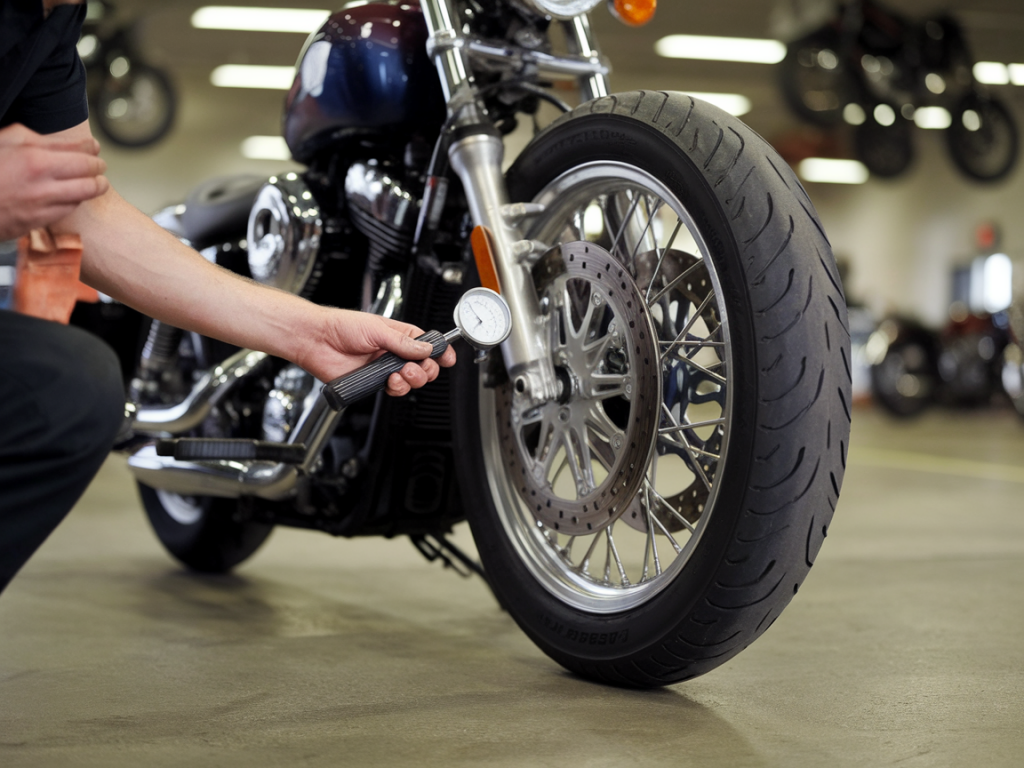
- Tyre condition and pressure (including wear indicators).
- Brake efficiency and free play.
- Steering and fork integrity.
- Noise and emissions (where applicable).
- Lighting, signalling, and mirror presence/adjustment.
| Inspection Item | Why it matters | Typical outcome |
|---|---|---|
| Tires | Grip, stability, puncture risk | Pass if tread & pressure OK; fail if worn or damaged |
| Brakes | Stopping distance & control | Measured pad wear, fluid condition; fail if inadequate |
| Lights & signals | Visibility & communication | Bulbs, alignment checked; immediate fail if missing |
Where to find reliable information and official texts
I recommend consulting these sources for authoritative updates and analysis:
- European Commission — Transport (policy and road safety context)
- Sécurité Routière (France) (national statistics and guidance)
- FEMA (Federation of European Motorcyclists Associations) (rider advocacy and position papers)
- Industry reporting: AutoExpress, Motorcyclist Magazine, Auto-Moto for country-level news
Scenario planning: what I would do if I owned a bike affected by a postponement
Here’s the checklist I would personally follow:
- Review the official postponement notice and new deadlines.
- Book a pre-inspection at a trusted garage to catch obvious faults early.
- Document maintenance and keep receipts in case of sale or insurance claims.
- Join a national riders’ association to receive advocacy updates and support for exemptions (historic bikes, custom builds).
- Monitor insurance policy wording — contact my insurer to clarify any clauses tied to technical inspections.
How this affects sustainability and the transition to cleaner two-wheelers
Inspections have a sustainability angle I find important. Properly enforced emissions checks encourage cleaner engines and quicker adoption of electric motorcycles. At the same time, a postponed start may delay the environmental benefits. Policymakers should use the extra time to integrate emission measurement protocols that are fair to small-scale manufacturers and the growing electric motorcycle market.