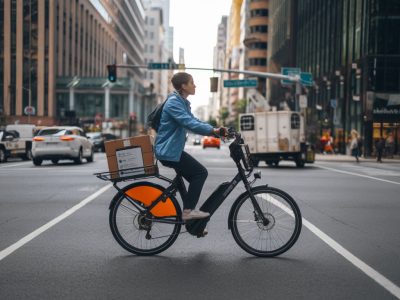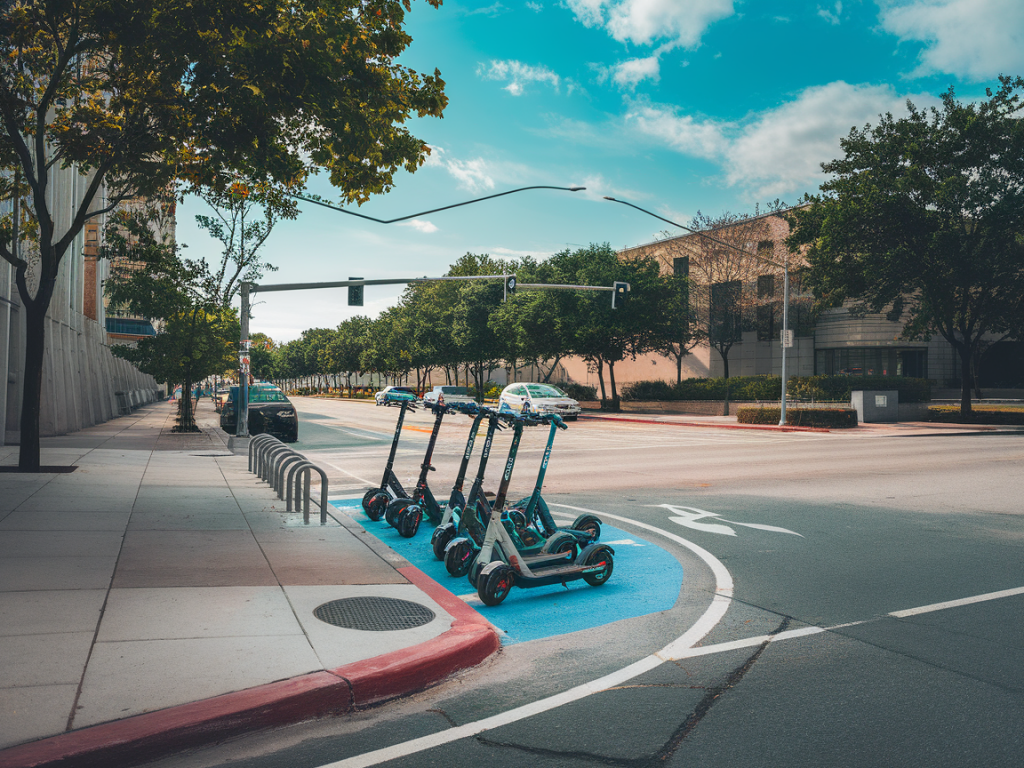
When I first started covering smart city tech, curbside management seemed like a mundane niche—until I watched a delivery van block a narrow sidewalk for twenty minutes while a cluster of pedestrians, a stroller and a wheelchair user waited. That moment crystallized a question I've been chasing ever since: can curbside AI prioritize deliveries, pickups and e-scooter parking without penalizing pedestrians?
Why curbside intelligence matters
Curbside space is the new real estate battleground in cities. Between ride-hailing, last-mile deliveries, shared micromobility and local pickups, demand for a few meters of kerb has exploded. I believe the way we manage this space will shape accessibility, equity and street life for decades.
AI offers promise: networks of cameras, sensors, and connected signage could dynamically allocate curb space to different functions based on time, demand and priority. But that promise comes with risks. If AI systems optimize solely for throughput—more deliveries per hour, more e-scooter churn—they can inadvertently push pedestrians into the street, reduce sidewalk space, and disadvantage people with mobility needs.
What “not penalizing pedestrians” actually means
When I say a system must not penalize pedestrians, I mean several concrete things:
- Maintain clear walking paths: Sidewalks and curb ramps must remain unobstructed, especially near transit stops, crosswalks and building entrances.
- Protect vulnerable users: Children, older adults and people with disabilities should not experience longer travel times or increased risk because of curb decisions.
- Preserve safety and comfort: Design choices shouldn't increase conflicts between pedestrians and vehicles or create intimidating micro-environments (e.g., dense scooter parking near entrances).
How AI can prioritize without compromise
From my reporting and conversations with urban planners, technologists and mobility operators, several design principles emerge for curbside AI that balances competing needs.
Context-aware prioritization
Not all curb demands are equal. An AI that understands context—time of day, adjacent land use, special events—can make smarter trade-offs. For example:
- Peak lunch hours near a business district: favor brief passenger drop-offs and food deliveries close to doorways, but keep a continuous pedestrian corridor.
- Outside a school at pickup time: prioritize short-term parental loading but enforce a wider clear path for students.
- Near a transit hub: reduce long-term e-scooter parking to preserve space for passenger loading/unloading.
Pedestrian-first rules encoded in AI
One practical approach I've advocated for is encoding non-negotiable pedestrian protections into the decision logic—hard constraints the AI cannot override. These include minimum sidewalk clearances, mandatory buffer zones at corners and crosswalk approaches, and prioritized access to curb space for wheelchair loading or accessible taxis.
Real-time sensing and feedback
AI is only as good as its sensors. Cameras, LiDAR and ground sensors can detect where people actually walk, how wide the natural path is, and where obstructions occur. When integrated with mobile apps and signage, the system can provide immediate feedback: rerouting e-scooter parking to an alternate bay, alerting a delivery driver to move, or temporarily reserving curb space for a boarding bus.
Transparency and human oversight
One persistent concern I hear is “black box” decisions. When a curb gets reallocated and my favorite café loses its loading zone, I want to know why. Transparency—published priority rules, data on curb allocations, and a public appeals mechanism—is essential. Human operators should be able to review and override AI decisions, particularly during edge cases or public events.
Who benefits—and who might lose?
When cities trial dynamic curb management (I’ve followed pilots in London, Los Angeles, and Singapore), the immediate winners are often delivery companies like Stuart or Glovo and micromobility operators such as Lime or Bird, because allocation efficiency reduces double-parking and idle vehicle time. But the losers can be small retailers, pedestrians and low-income residents—unless policy and design intervene.
Practical deployment elements I look for
- Clear digital permits: Time-limited, auditable curb access permits issued via APIs to delivery fleets and scooter operators.
- Geofenced parking bays: Designated e-scooter bays with visible boundaries and incentives to dock correctly.
- Adaptive signage: Real-time curb signs (digital or app-based) showing permitted uses and remaining time.
- Priority tiers: A hierarchy that always places pedestrian clearways and accessible needs above commercial efficiency.
- Enforcement integration: Automated ticketing or warnings for curb violations, paired with education campaigns.
Technologies that matter
Several technologies are converging to make this possible:
- Computer vision: Detects people, vehicles, scooters and obstructions; can estimate sidewalk occupancy and flow.
- Edge computing: Processes data locally for faster decisions and privacy preservation.
- Open APIs: Allow fleets and apps to request curb space and receive allocations—some cities are experimenting with standards led by groups like Open Mobility Foundation.
- Machine learning with constraints: Optimization that respects hard safety rules while maximizing service metrics.
Trade-offs and tricky questions
There are no perfect answers—only trade-offs. Here are the ones I ask when evaluating a system:
- Does the AI prioritize average throughput at the expense of peak accessibility?
- How does the system measure pedestrian quality of service? Sidewalk width is easy to quantify, but perceived safety and comfort are harder.
- Who controls the priority rules? City departments, third-party vendors, or private operators?
- How is vulnerable-user data protected when using camera-based sensing?
Examples and pilots worth watching
Some pilots are pointing the way. In London, trials integrating delivery booking with curb reservations reduced double-parking incidents near high-demand retail corridors. In Los Angeles, curb-management APIs allowed freight companies to book micro-loading zones during off-peak hours, while the city enforced sidewalk buffers near transit stops.
| Pilot | Key feature | Pedestrian safeguard |
|---|---|---|
| London micro-loading pilot | Booking API for deliveries | Reserved pedestrian corridor enforced by camera |
| LA curb API trial | Dynamically allocated loading bays | No allocation within 5m of crosswalks and ramps |
| Singapore kerbside management | Integrated micromobility bays | Mandatory docking zones with physical separators |
Policy levers that make AI pedestrian-friendly
Technology alone won't protect pedestrians. I’m convinced the right mix of policy tools is necessary:
- Minimum sidewalk clearances: Lawful requirements that cannot be overridden by market demand.
- Priority for accessibility: Reserved curb time for accessible transport services and wheelchair loading.
- Data sharing mandates: Operators must share usage data with cities to ensure accountability.
- Inclusive planning: Engage communities—especially mobility-impaired users—before rolling out dynamic curb programs.
Final thoughts (not a conclusion)
I've seen promising demonstrations where AI reduces kerbside chaos while safeguarding walking space. But success depends on intentionally designing systems that treat pedestrian needs as non-negotiable constraints, not variables to be minimized. If we get the rules and oversight right—open data, explicit pedestrian protections, and transparent enforcement—curbside AI can be a tool that improves delivery efficiency and micromobility usability without turning sidewalks into an afterthought.
I'm continuing to track pilots and speak with city officials and tech vendors. If you have examples from your city—good or bad—I’d love to hear them for future reporting on Mobility News at mobility-news.uk.