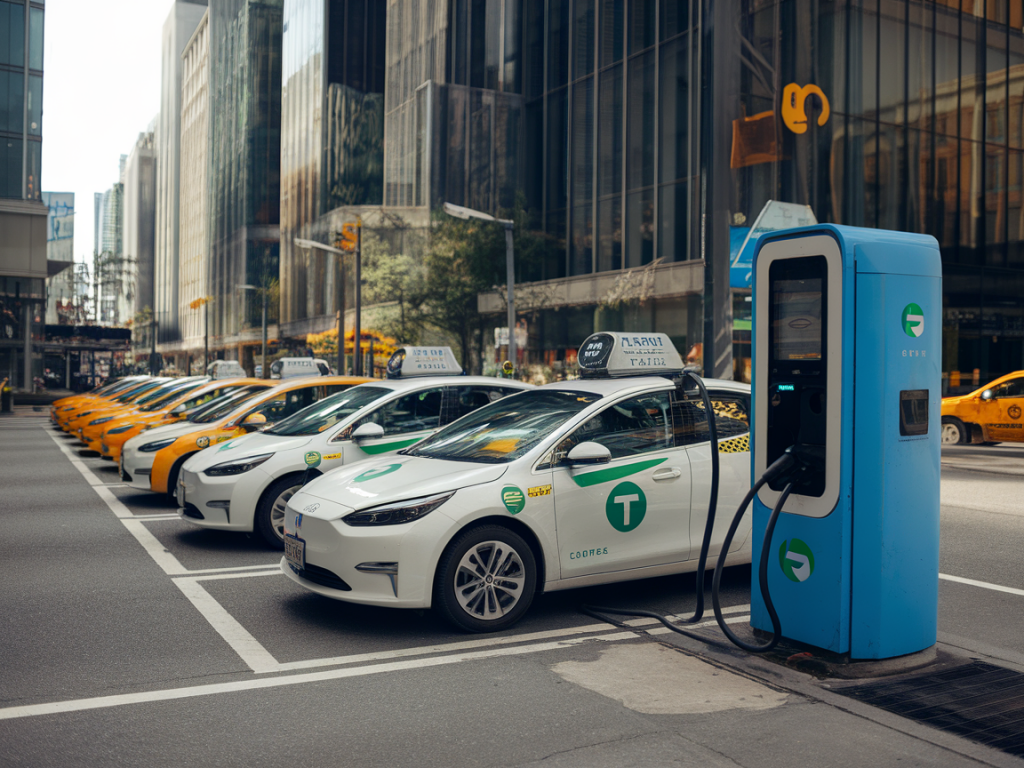
I remember the first time I saw an on-street battery swap kiosk in action: a neatly designed booth at the curb, a driver tapping an app, and within minutes a fresh pack was slotted into the vehicle. It felt like a glimpse of a different logic for electric mobility — one where energy is the equivalent of a quick pit stop rather than a multi-hour wait. As someone who watches mobility innovation closely, I keep asking: could on-street battery swap kiosks make EV taxis profitable in dense city centers?
In this piece I want to walk you through how these kiosks work, why they might revive the economics of urban taxi fleets, what’s standing in their way, and what city planners and operators would need to make swapping not just technically feasible but financially sensible. I’ll ground the discussion with real-world examples and practical numbers where possible, while keeping an eye on the policy and design choices that matter most.
What is an on-street battery swap kiosk?
An on-street battery swap kiosk is essentially a public station where the depleted battery of an electric vehicle (typically a taxi, light commercial vehicle, or motorcycle) can be quickly replaced with a charged one. The station can be semi-automated or fully robotic, and it's placed curbside or in a dedicated bay to keep downtime minimal. Think of it as a petrol pump for battery modules — except the “fuel” is a removable battery unit.
Brands and projects I often look to for lessons include NIO (battery swapping for passenger cars in China), Gogoro (scooter battery swapping in Taiwan), Ample (modular swapping in the US), and earlier experiments like Better Place. Each has taken a different route in terms of standardization, automation and business model.
Why swap could make EV taxis more profitable
There are a few practical pain points for EV taxis in dense city centers that swapping addresses directly:
From a profitability perspective, the core metric is revenue per vehicle per hour. If swapping can increase an EV taxi’s active service time by even 10–20% versus depot charging, the additional fares can more than cover the swap fee, especially in premium or high-demand city center routes.
How the economics could work — some rough numbers
Let me walk you through a simplified model that shows the potential. Assume a taxi operates 12-hour shifts and currently averages 10 revenue hours per shift due to charging and downtime. If swapping reduces charging downtime and increases revenue hours to 11.5 per shift, that’s a 15% increase.
| Metric | Conventional charging | With swap kiosks |
|---|---|---|
| Revenue hours per shift | 10 | 11.5 |
| Average fare per hour | £25 | £25 |
| Daily incremental revenue | — | £37.5 |
| Swap cost per operation | — | £5–£10 |
| Net gain per shift (approx) | — | £27.5–£32.5 |
Over a year and across a fleet, those increments add up. Of course the model depends on swap cost, utilization rates, and fleet management. But the principle is clear: small increases in utilization translate into significant revenue gains for taxis operating in dense centres.
Main challenges and trade-offs
No technology is a silver bullet. Here are the big hurdles I keep seeing:
What a viable rollout would look like
If I had to design a pragmatic path to make swapping work for taxis in a dense city, it would include:
Lessons from existing deployments
NIO’s model in China demonstrates that swapping can scale when a single manufacturer commits to the ecosystem — the company has completed millions of swaps. Gogoro shows swapping can be extremely successful in two-wheeled markets where packs are small and easy to handle. Ample’s approach of retrofitting vehicles with standardized modules shows there are technical pathways for mixed fleets, but commercial rollout is still early.
Better Place’s failure in the early 2010s often gets cited; its lesson wasn’t that swapping is impossible but that you need aligned partners, sustainable capital and enough density. Better Place tried to build a nationwide network in several countries before demand materialized. Today’s cities and fleets can take a more targeted, incremental approach.
Who benefits, and who bears the costs?
Winners in this scenario include taxi drivers (higher earnings through more vehicle hours), fleet operators (reduced depreciation risk if batteries are leased), swapping operators (service fees), and cities (reduced street pollution and potential to manage electricity loads centrally). The costs fall on kiosk capital, battery inventory, regulatory approvals and potentially on drivers if fees are poorly structured.
Policy makers can accelerate adoption by allocating curb space, offering pilot permits, and facilitating pilot agreements between taxi associations and swap providers. From an urban planning perspective, the trick is to balance curb usage so swapping bays don’t crowd out essential services.
If there’s one overarching point I keep returning to, it’s this: on-street battery swap kiosks can make EV taxis more profitable — but only when the technical, commercial and regulatory pieces are assembled thoughtfully. They’re not a universal solution for all EV use cases, but for high-utilization taxi fleets operating in tight urban grids, swapping offers a compelling way to turn energy into uptime rather than waiting time.