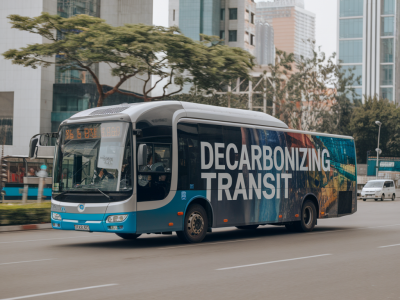
I’ve been watching the electrification of urban fleets for years, and one question keeps coming up in conversations with fleet managers, city planners and mobility startups: Can modular battery swap hubs make electric taxi fleets profitable in congested city centers? From where I stand at Mobility News, the short answer is: yes—sometimes. But that “sometimes” hides a lot of nuance about vehicle design, operational practices, real estate, and regulatory support. In this article I’ll walk you through the economics, the technical realities, and the practical trade-offs so you can judge whether swapping could be a game changer for taxis in dense urban cores.
Why swapping looks attractive to taxi operators
Taxis and ride-hailing vehicles are high-utilization assets: they need to be on the road as much as possible. Traditional overnight charging can work for private fleets with predictable schedules, but in congested city centers vehicles face slow charging times, limited curbside infrastructure, and heavy downtime risk. A modular battery swap hub promises:
Those benefits directly translate to higher vehicle uptime, simplified vehicle maintenance, and—if executed well—lower total cost of ownership per kilometer.
How modular swap hubs differ from earlier swap attempts
The idea of battery swapping is not new. Better Place tried it for passenger cars and failed for several reasons, including lack of standardization and massive upfront capital expenditures. More recent implementations, though, have learned from that history. Companies like NIO (for consumer EVs in China) and Gogoro (for scooters) built practical business models by focusing on specific vehicle categories and controlled ecosystems.
Where modular swap hubs shine for taxis is by decoupling battery ownership and allowing operators to treat batteries like inventory. Modular here means batteries are designed to be easily handled, swapped by robotic or semi-automated systems, and compatible across a fleet of purpose-built vehicles (or retrofitted platforms that adhere to a common standard).
Key technical and operational considerations
For swap hubs to be viable in congested urban centers, several things must align:
Costs and revenue levers
From a profitability perspective, several levers determine success:
Profitability becomes realistic when vehicle uptime improves enough to offset the extra capex and the additional operating complexity of managing battery inventory. In many business models, the BaaS component provides a recurring revenue stream that helps the hub pay for itself.
Real-world examples and pilots
NIO’s swap stations in China offer a useful reference point: they’re targeted at consumer EVs but demonstrate the speed and customer acceptance of swapping when networks and vehicles are aligned. Gogoro in Taiwan shows how a tightly integrated scooter ecosystem—vehicle, battery, and swap network—can scale rapidly with city-wide coverage.
For taxis, I’ve seen pilots where companies retrofit fleet vehicles with modular packs and deploy micro-hubs near taxi ranks. These pilots reveal a few consistent learnings:
Trade-offs: swapping vs. high-power charging
It’s tempting to treat swapping as an outright replacement for fast-charging. In practice, both have roles. High-power DC fast chargers are increasingly available and cheaper to deploy per point. But chargers still consume curbside space and take time. Swap hubs are more capital-intensive but yield superior uptime.
The right mix often looks like this:
Policy and regulatory enablers
City policy can make or break swap hubs. Key enablers include:
I’ve seen cities fast-track pilots when it’s clear swapping reduces curb congestion and local pollution—both big selling points for urban policymakers.
My recommendations for fleet operators and city planners
If you’re a taxi operator considering swapping, here’s how I’d approach it:
For city planners, my advice is:
Comparative snapshot
| Metric | Battery Swapping | DC Fast Charging |
|---|---|---|
| Refuel time | 3–10 minutes | 15–60+ minutes |
| Upfront infrastructure cost | High (robotics, batteries, real estate) | Medium (chargers, grid upgrades) |
| Space requirement | Centralized hub footprint | Distributed curb/parking spots |
| Operational complexity | High (inventory, logistics) | Lower (straightforward charging) |
| Best use case | High-utilization fleets in dense cores | Mixed-use, public access, long-distance |
Swapping is not a silver bullet, but it’s one of the most promising strategies to make high-utilization electric taxi fleets financially viable in congested city centers—provided operators can manage the capital and operational complexities. I’m excited to see more pilots that combine modular design, smart software and city collaboration. These will prove whether swapping can move from niche to mainstream in urban mobility.