Micromobility

Will modular battery leasing let cargo e-bikes outcompete small electric vans for last-mile logistics?

Will modular battery leasing let cargo e-bikes outcompete small electric vans for last-mile logistics?

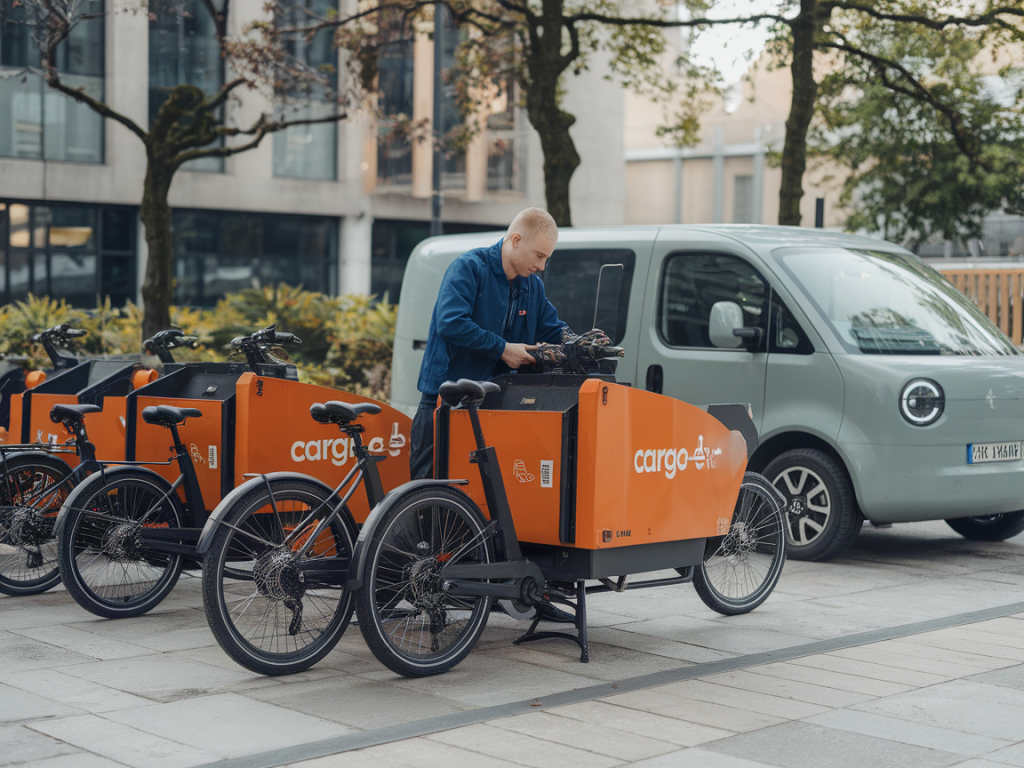
As someone who's spent years following how cities, startups and fleets adapt to new mobility tech, I get asked a lot whether cargo e-bikes can really replace small electric vans for last‑mile logistics. Lately one idea keeps coming up in conversations with operators and founders: modular battery leasing — a service model that decouples batteries from vehicles and provides hot‑swappable or easily replaceable packs on demand. I wanted to dig into whether that model could be the missing piece that lets cargo e‑bikes outcompete small vans in urban deliveries.

Why modular battery leasing matters

Battery weight, cost and charging downtime are the main pain points that limit e‑bikes in commercial use. A lightweight cargo e‑bike can be incredibly efficient, nimble and cheap to operate, but range anxiety and long recharging periods reduce productivity for riders doing many stops per shift.

Modular battery leasing addresses those exact problems. Instead of buying heavy battery packs outright, fleets lease standardized modules from a provider and swap depleted modules for charged ones at depots, kiosks or via mobile technicians. The advantages are straightforward:

  • Lower upfront cost — operators avoid the large capital expense of high-capacity batteries and pay predictable subscription fees.
  • Near-zero downtime — swapping takes minutes versus hours of charging.
  • Battery lifecycle management — providers handle maintenance, recycling and replacements, which simplifies fleet ops and total cost of ownership (TCO) accounting.
  • Scalability — fleets can scale vehicle numbers independently from battery inventory to match demand peaks.
  • Companies like Swobbee and Sun Mobility have been working on swapping ecosystems for light electric vehicles and scooters, and you also see the leasing philosophy in European bike services such as Swapfiets (though Swapfiets focuses on consumer bikes). For cargo e‑bikes, brands like Urban Arrow, Tern and Babboe are partnering with battery tech providers to offer more modular solutions.

    Can modular batteries make cargo e‑bikes competitive with small electric vans?

    Let’s look at the core decision drivers for fleet managers: cost (capex & opex), productivity (payload × range × speed), urban access and environmental impact. From my conversations with logistics operators, here’s how modular battery leasing changes the equation.

  • Cost per delivery: Cargo e‑bikes already win on energy cost and maintenance compared with vans. When you add battery leasing, the capex barrier falls dramatically. Instead of buying 48‑volt or 72‑volt high‑capacity packs for each bike, companies lease modular units shared across vehicles. That shifts spending to an operational model the finance team often prefers. In many city routes I’ve examined, this can drop the break‑even point to a matter of months versus years for vans.
  • Utilization and uptime: Vans benefit from longer absolute ranges and higher payloads, but they also spend time idling in traffic and searching for parking. Swappable batteries mean e‑bikes spend more time moving and less time charging. In dense urban routes with frequent stops, that uptime advantage multiplies productivity. One last‑mile operator I spoke with reported a ~20% uplift in daily deliveries after adopting a battery swap regime for a mixed e‑bike fleet.
  • Payload limitations: Vans still carry heavier loads and bulkier parcels. Cargo e‑bikes are best suited to parcels up to ~200–300 kg (depending on model) and shorter routes with many stops. For micro‑fulfilment and neighborhood delivery, batteries help but won’t change the physics of size. That means e‑bikes can replace many, but not all, van trips.
  • Operational complexity: Battery swapping requires an ecosystem — swap points, inventory management, and a standardised connector and form factor. That’s a hurdle, but it’s solvable. Standardisation is starting to emerge in Europe and Asia for scooters and e‑bikes, and if larger fleets and city authorities push for it, network effects would make adoption easier.
  • Environmental impact: Centralized charging and active battery lifecycle management from a leasing provider often improves emissions and recycling outcomes versus many operators charging ad‑hoc with local grids. Providers can charge batteries at off‑peak times on renewable tariffs and ensure end‑of‑life recycling.
  • Typical operational models and who benefits

    Modular battery leasing opens several operational patterns. Here are the ones I see gaining traction:

  • Depot swapping — riders return to a micro‑depot to exchange packs during breaks or shift changes. Easiest to implement for courier networks with existing hubs.
  • Distributed swap network — small kiosks or vending-like swap stations in neighborhoods. Great for gig couriers and independent couriers who don’t have a company depot.
  • Mobile swap & charge — vans or e‑cargo vehicles that serve as rolling swap stations, bringing charged modules to riders during peak windows.
  • Which operators benefit most? Local grocery delivery, B2C parcel networks, and food delivery aggregators are already moving toward e‑cargo bikes. The leasing model particularly helps smaller operators who can’t afford heavy battery investments but need predictable performance.

    Comparative snapshot

    Cargo e‑bike (with modular battery leasing) Small electric van
    Upfront vehicle capex Low (bike cost only; batteries leased) High (vehicle + battery included)
    Operating cost per km Very low (efficient, lower maintenance) Higher (energy, maintenance, insurance)
    Payload Modest (100–300 kg typical) High (several hundred kg to >1000 kg)
    Range & uptime Extended via swapping; fast resume Longer continuous range, but slower re‑charge
    Urban access Excellent (cyclist lanes, parking) Limited by congestion & parking rules
    Infrastructure need Swap stations + inventory mgmt Charging stations, depot chargers

    What still needs to happen

    For modular battery leasing to truly tip the scales, a few things must align:

  • Standardisation — a common physical form factor and communication protocol for batteries across bike makers. Without it, swap networks fragment and costs remain high.
  • Network density — swap points must be frequent enough to make swapping convenient. That requires partnerships between battery providers, local authorities and real estate owners.
  • Regulatory support — favourable access rules for e‑bikes in pedestrian zones, curb priority and micro‑depots accelerate modal shift.
  • Business model alignment — leasing pricing must be compelling and predictable. Providers must demonstrate long-term cost and environmental benefits.
  • I've seen prototypes and pilots from startups working with logistics players that show promising unit economics. In Amsterdam, for example, operators using cargo bikes with swap systems are already diverting large shares of parcel flows from vans during daytime peaks. But scaling beyond pilot networks requires capital, partnerships and operational discipline.

    Practical tips for fleet managers testing the model

    If you're running a small fleet or exploring pilots, here are questions to ask potential battery leasing partners:

  • What is the mean time to swap and how is station uptime guaranteed?
  • How are batteries tracked (SoC, health metrics) and is that data shared with my fleet management platform?
  • What are the SLAs for replacement and recycling at end of life?
  • Is the battery compatible with multiple bike models or locked to one supplier?
  • How does pricing scale with seasonal demand spikes?
  • I encourage fleet teams to start with a small, high-frequency route where parking is difficult and delivery density is high. That’s where cargo e‑bikes with modular swapping typically produce the clearest ROI.

    Ultimately, modular battery leasing is not a silver bullet, but it is a powerful tool that changes the economics and practicality of cargo e‑bikes. In many urban contexts I cover in Mobility News, the combination of lower cost, higher uptime and better environmental performance makes e‑bikes a compelling alternative to small electric vans — especially for the dense, stop‑heavy corridors that dominate last‑mile work. The question now is whether cities, fleet operators and battery providers can move beyond pilots and create the standardised, dense swap networks that will let cargo bikes reach their full potential.

    You should also check the following news:

    Could on-street battery swap kiosks make ev taxis turn profitable in dense city centers?
    Electric Vehicles

    Could on-street battery swap kiosks make ev taxis turn profitable in dense city centers?

    I remember the first time I saw an on-street battery swap kiosk in action: a neatly designed booth...

    Mar 17 Read more...
    Are solid-state battery retrofits realistic for extending the life of existing ev fleets?
    Electric Vehicles

    Are solid-state battery retrofits realistic for extending the life of existing ev fleets?

    I often get asked whether solid-state batteries (SSBs) could be the silver bullet for keeping...

    Mar 08 Read more...