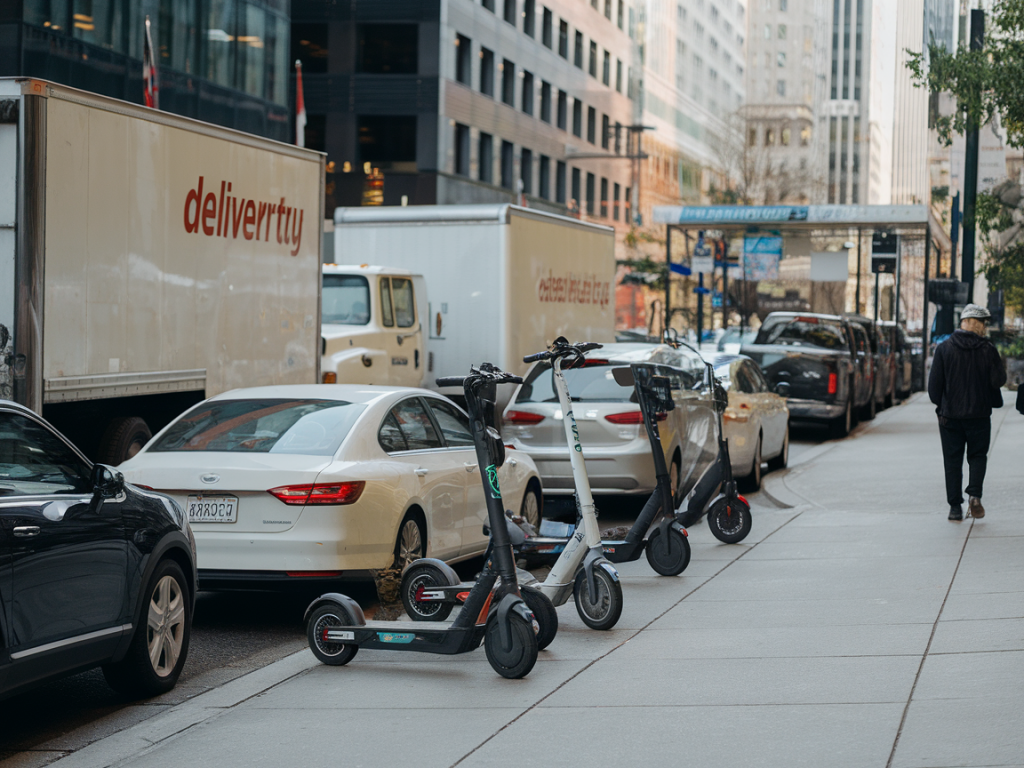
I often walk the streets of cities I'm covering and watch a chaotic ballet: couriers double-park to drop off packages, ride-hail drivers circle for pickups, e-scooters are abandoned on sidewalks, and pedestrians thread their way through gaps. It’s messy, but it’s also a rich data source for imagining something better. Increasingly, cities and private operators are betting on AI-driven curb management to bring order — and fairness — to competing uses of limited curb space. The question I'm asking as a mobility editor and urbanist is: can these systems fairly balance pickups, deliveries, and micromobility without harming pedestrians?
What do we mean by AI-driven curb management?
At its core, AI-driven curb management uses sensors, cameras, historical data, and machine learning models to optimize how curb space is allocated in real time. Instead of static rules (no stopping, loading only, taxi zone), algorithms can dynamically create, allocate, and price curb zones for different uses: delivery loading, ride-hail pick-up/drop-off, micromobility parking, and pedestrian clearways.
Companies like Coord (now part of Via), INRIX, and Sidewalk Labs have prototyped systems that integrate traffic data with city scheduling. Platforms tie into operator APIs (think Uber, Deliveroo, Lime) so allocations can adapt to demand spikes. But the tech alone isn’t neutral — the design choices determine who wins and who loses.
Which stakeholders benefit, and who might be disadvantaged?
Stakeholders include:
Potential winners: logistics firms who can pay for prioritized curb access, affluent neighborhoods that can lobby for more passenger pick-up zones, and micromobility operators who integrate smoothly with city platforms.
Potential losers: pedestrians and people with reduced mobility if curb allocations prioritize vehicles over clear walkways; low-income neighborhoods if dynamic pricing makes curb access unaffordable for local businesses; and independent couriers who can't integrate into digital reservation systems.
How can AI be fair in practice?
Fairness needs to be built into the system, not assumed. Here are the operational levers I look for when evaluating projects:
What are the main risks to pedestrians?
Even with the best intentions, curb management can harm pedestrians in three main ways:
To mitigate these, I believe cities must pair AI platforms with strong enforcement: physical demarcation (bollards, curb painting), clear signage, and penalties for non-compliance. Technology like geofencing for micromobility parking and automated photo enforcement for illegal stopping can help, but only if policy backs them.
How do we ensure equity across neighborhoods?
One of my biggest concerns is that market-driven curb allocation will privilege those who can pay. Dynamic pricing models risk turning valuable curb space into a premium commodity for high-paying delivery companies and ride-hail operators, leaving smaller businesses and low-income areas underserved.
Strategies to preserve equity:
What technical challenges should we watch?
Some practical hurdles are often underestimated:
Are there promising pilots I’ve seen?
I followed trials in cities such as San Francisco and Seattle where curb space was dynamically priced during peak periods. In several European trials, dedicated loading bays with short-term reservations for couriers reduced double-parking. Micromobility hubs integrated with city apps — for example, systems that reserve a row of dockless scooters in designated corrals — helped keep sidewalks clear.
One project combined geofenced micromobility parking with an app that notified riders of nearby legal parking, reducing sidewalk clutter by 30%. Another integrated delivery scheduling with curb reservations so couriers could reserve a 15-minute slot, leading to faster turnover and fewer illegal stops. Success stories all shared one trait: coordination between city regulations, enforcement, and operator cooperation.
What should cities demand before deploying AI curb systems?
If I were advising a city council, my checklist would include:
| Objective | AI lever | Human safeguard |
| Pedestrian safety | Weighting in optimization | Non-negotiable pedestrian zones & enforcement |
| Delivery efficiency | Dynamic reservations & pricing | Quotas for small businesses |
| Equity | Equity-weighted cost functions | Subsidies & neighborhood guarantees |
AI offers powerful tools to rationalize a chaotic curb, but technology alone won't make streets more humane. It requires value-driven design, robust regulation, and community oversight. As I continue to watch pilots and talk to planners, riders, and couriers, I remain cautiously optimistic: when guided by clear public-interest goals, AI-driven curb management can fairly balance competing needs — but only if cities insist that pedestrians and accessibility are non-negotiable priorities.