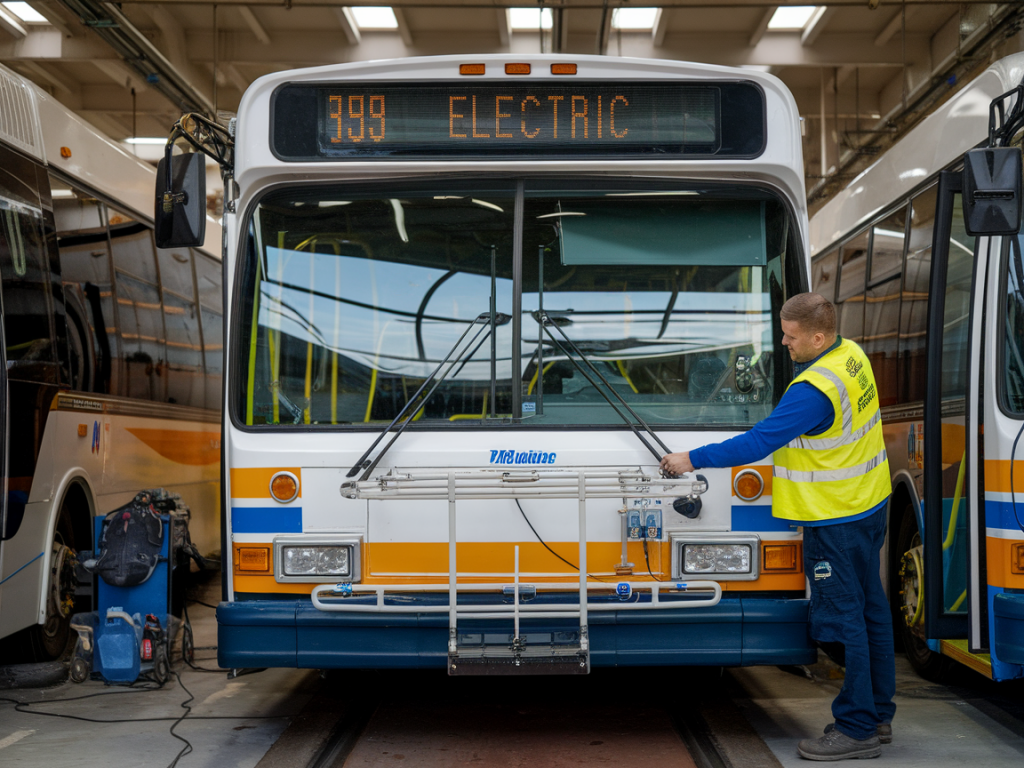
When transit agencies talk about extending the life of an electric bus fleet, the conversation usually turns to replacing batteries, swapping to newer models, or scrapping vehicles that no longer meet range or reliability expectations. Lately, I've been exploring a different path: modular solid-state retrofit kits that promise to halve downtime and meaningfully extend range for legacy electric buses. As someone who follows innovation in mobility closely at Mobility News (https://www.mobility-news.uk), I wanted to dig into whether these kits are practical or simply attractive hype.
What exactly are modular solid-state retrofit kits?
In simple terms, these kits replace or augment existing lithium-ion battery packs with compact, modular battery modules that employ solid-state cell chemistry or semi-solid configurations. The goal is to improve energy density, thermal stability, and cycle life while enabling quick swap or plug-and-play servicing. The "modular" part emphasizes standardized units that can be installed, removed, or serviced independently — ideally reducing the time a bus spends out of service.
Why the interest for legacy electric buses?
Many transit agencies purchased early-generation electric buses with battery technology that has since been outpaced. These older packs suffer from reduced capacity, longer charging times, and more frequent maintenance. Retrofitting can be more cost-effective than full bus replacement. My interest is practical: can a retrofit deliver real operational improvements (less downtime, more range) without prohibitive complexity or cost?
Key potential benefits I see
Reduced downtime: Modular designs can support field-replaceable units and faster diagnostics. Instead of sending a whole bus to a depot for a battery module swap, crews could swap a single module on-site or at quick-turn hubs.Range extension: Higher energy density solid-state cells can increase usable capacity within the same volume or weight constraints, translating directly to extra kilometers per charge.Improved thermal and safety profile: Solid-state cells typically reduce fire risk and may tolerate higher temperatures, simplifying cooling systems and reducing maintenance events tied to thermal management.Scalability and future-proofing: Modular kits can be phased in, allowing mixed fleets to be upgraded progressively rather than all at once.Practical challenges that caught my attention
Despite the potential, I found several practical constraints agencies must consider before investing:
Physical compatibility: Buses come in many architectures. Mounting points, battery bay volume, and weight distribution vary widely. Even modular kits may require custom mechanical adapters or chassis reinforcement.Electrical integration: Battery management systems (BMS), high-voltage interlocks, and vehicle controllers must be integrated and validated. Legacy bus control software may not accept new BMS communication protocols without significant rework.Thermal management: While solid-state cells can operate differently from liquid-electrolyte cells, they still require thoughtful thermal design. Retrofit kits that ignore existing thermal systems risk degrading performance or shortening life.Certification and safety approvals: Retrofitting energy systems on buses often triggers regulatory tests and approvals — from type-approval amendments to fire-safety checks. These can be time-consuming and costly, especially across different national markets.Supply and maturity of solid-state cells: True solid-state cells are still maturing commercially. Many "solid-state" claims today refer to hybrid or semi-solid chemistries. Buyers need clarity on cell chemistry and proven cycle life under heavy-duty transit duty cycles.Operational models that make sense to me
From my conversations with fleet managers and startups, three retrofit business models seem most realistic:
Depot-based modular swaps: Buses return to the depot overnight; modular packs are swapped quickly by trained technicians. This reduces downtime but still relies on centralized operations.On-route hot-swap hubs: Strategic nodes where modules are swapped in minutes during scheduled layovers. This requires lightweight modularity and automated handling equipment.Hybrid augmentation: Kits that augment an existing pack rather than replace it entirely — useful when space is limited or when agencies want incremental capacity increases.Cost considerations — an essential table
| Item | Range |
| Initial kit cost (per bus) | £50k–£200k depending on capacity & integration |
| Installation & integration | £5k–£50k (depends on customization) |
| Certification & testing | £10k–£100k (varies by jurisdiction) |
| Operational savings (energy & downtime) | Potentially 10–40% annually |
These numbers are indicative. The spread reflects differences between retrofitting a standardized chassis with a clear battery bay and adapting a bespoke older vehicle.
Case studies and product names worth noting
I’ve followed a few startups and established suppliers pushing modular battery solutions. Examples include companies like Proterra and ABB experimenting with modular approaches for commercial vehicles, and newer players promising solid-state modules aimed at heavy-duty transit. While I won’t single out an unproven vendor as a silver bullet, the trend is clear: vendors who prioritize open standards, robust BMS interoperability, and mechanical modularity are most likely to succeed in the retrofit market.
What I’d advise fleet managers considering a retrofit
Start with a pilot: Retrofit a small subset of buses and run them through real duty cycles to measure range, charge time, and maintenance impacts before committing fleet-wide.Demand transparency on chemistry and cycle life: Ask suppliers for real-world aging data under heavy-duty cycles, not just lab figures.Plan for integration: Budget for BMS and vehicle controller integration, and include wiring harness and cooling adaptations in quotes.Factor in end-of-life and second-life: Explore whether modules can be repurposed for stationary storage once bus use declines — an important economic upside.Engage with regulators early: Secure clarity on certification pathways to avoid last-minute compliance delays.Questions people often ask me
Can a retrofit really halve downtime? Potentially yes, if the modular system supports rapid swaps and the depot/operation model is redesigned for fast turnover. It’s not automatic — operations must adapt.Is the technology proven? Semi-solid and hybrid solid-state chemistries are in commercial use, but full solid-state remains emerging. Proof points exist, but buyers should avoid blind faith and insist on deployment data.Is it cheaper than buying new buses? Often cheaper in the short-to-mid term, particularly when vehicle frames and drivetrains are still in good shape. Total cost of ownership depends on installation costs and long-term module durability.At Mobility News, I’ll keep tracking pilots and real-world deployments because the promise of halving downtime and extending range for legacy fleets is too valuable to ignore. For agencies balancing budgets with sustainability goals, modular solid-state retrofits may become a pragmatic bridge — if the technical, operational, and regulatory pieces fall into place.