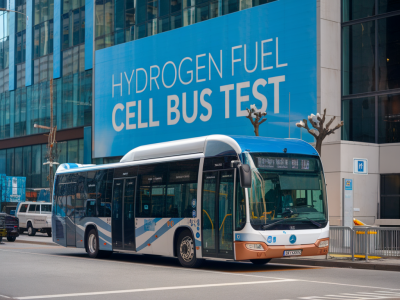
As cities in emerging markets grapple with aging diesel bus fleets, I keep asking: is there a practical bridge between the status quo and a fully electrified future? Recently I’ve been investigating an intriguing option—retrofitting legacy diesel buses with modular solid-state packs—and what it could mean for cost, downtime, and operational resilience. In this piece I want to walk you through the technical promise, the operational realities, and the questions operators should be asking before committing resources.
Why consider retrofits instead of new e-buses?
Buying new electric buses is the cleanest long-term approach, but in many emerging markets, the capital constraints, supply chain delays, and lack of local after-sales support make mass replacement unrealistic in the short term. I often hear transit managers say they simply don’t have the budget for a wholesale fleet upgrade. Retrofitting existing diesel chassis with electric drivetrains—and specifically with modular solid-state packs—seems like an appealing middle path: lower upfront cost, reuse of bodywork and maintenance infrastructure, and potentially faster deployment.
What exactly are modular solid-state packs?
Solid-state batteries replace the liquid electrolyte in conventional lithium-ion cells with a solid electrolyte. They promise higher energy density, improved safety (lower fire risk), and longer cycle life. When I say modular, I mean battery packs designed as discrete, swappable units—think of them like Lego bricks for energy. This modular approach supports rapid replacement, phased upgrades, and easier maintenance.
Key benefits I’ve observed
- Reduced capital outlay: Retrofitting can cost a fraction of a new e-bus. The main expense is the battery modules and inverter/e-motor integration.
- Less downtime (potentially): With modular, swappable packs, buses can be back on the road quickly while depleted modules are charged off-vehicle. For operators with limited depot charging infrastructure, that’s a game-changer.
- Incremental fleet electrification: You can retrofit a subset of vehicles to test routes and operations before committing to a full fleet transition.
- Safety and lifespan: Solid-state chemistry may reduce thermal runaway risks and increase pack longevity, which improves lifecycle economics if the promised durability holds in field conditions.
Main challenges and trade-offs I can’t ignore
However, the dream isn’t without obstacles. From my conversations with engineers and operators, several recurring challenges surface:
- Technical integration: Diesel chassis were not designed for battery packs. Reinforcing frames, managing weight distribution, and integrating thermal management systems add complexity.
- Battery maturity and cost: Solid-state technology is still emerging commercially. Prices remain high compared to established lithium-ion chemistries, and real-world degradation data for heavy-duty cycles is limited.
- Standardization: Without widely accepted module dimensions and electrical interfaces, operators risk vendor lock-in. Swappable modules only make sense if a common standard exists.
- Charging and logistics: Modular swapping reduces vehicle downtime but shifts the burden to depots: you need charging capacity, storage, and handling equipment for modules.
- Regulatory and warranty issues: Altering OEM vehicles may affect warranties and requires regulatory approvals in many jurisdictions.
How much can it actually cut costs and downtime?
Numbers vary widely depending on local labor, electricity prices, and how much of the original vehicle you reuse. From the projects I’ve reviewed and pilots I’ve visited, a rough synthesis emerges:
| Option | Typical upfront cost vs new e-bus | Typical vehicle downtime | Operational caveats |
|---|---|---|---|
| New electric bus | 100% (baseline) | Minimal (manufacturer support) | Highest capital, long warranty, integrated systems |
| Retrofit with lithium-ion fixed packs | 40–60% | Several days to weeks (installation) | Lower battery cost, established tech, limited swapping |
| Retrofit with modular solid-state packs | 50–80% (depending on cell cost) | Hours with swapping (if logistics set up) | Higher pack cost, reduced long-term charge cycles, less field data |
In short: modular solid-state retrofits can lower overall fleet cost compared to buying new in the short term, and they have the potential to cut vehicle downtime dramatically—if you can finance and operate the swap/charging infrastructure efficiently.
Operational models that make sense
From my fieldwork, I see three viable operational models:
- Depot-based swapping: Buses come to a central depot, packs are swapped quickly, and depleted modules are charged in the background. Works well for radial routes returning to base frequently.
- On-route micro-hubs: Small swapping stations at end-of-line points allow continuous operation on long routes, but require investment in multiple hubs.
- Hybrid charging + swapping: Combine overnight depot charging for most needs with swapping as contingency for peak days or unexpected events.
Questions operators and policymakers should be asking
When I advise transit agencies, I encourage them to ask precise questions before piloting retrofits:
- What is the realistic life-cycle cost of solid-state modules vs established lithium chemistries in heavy-duty duty cycles?
- Are there industry standards for module form factor and connectors we can rely on or help establish?
- What are the depot space, handling, and electrical upgrades required for a swapping operation?
- How will retrofits affect vehicle safety certifications, insurance, and warranties?
- Who will own, operate, and insure the battery modules—fleet operator, third-party battery-as-a-service vendor, or OEM?
Case studies and emerging players
I’ve followed pilots in Latin America and parts of Africa where local integrators retrofit minibuses and medium-duty buses. Companies like Proterra (in battery systems) and startups focusing on swapping infrastructure are beginning to collaborate with local partners. In one pilot I observed, a city reduced service interruptions by rotating packs during peak periods—though module costs remained a significant barrier to scaling.
Practical steps to test the approach
If you’re an operator or policymaker considering this route, here’s a pragmatic roadmap I recommend:
- Start small with a pilot on a high-frequency, depot-return route to validate swapping speed and module durability.
- Partner with a battery-as-a-service provider to reduce upfront module expense and share degradation risk.
- Design for modularity: insist on interoperable connectors, clear safety protocols, and remote battery performance monitoring.
- Measure total system uptime, cost-per-km, and maintenance labor changes—not just upfront purchase price.
- Engage regulators early to streamline approvals and address warranty implications with OEMs.
Retrofitting legacy diesel buses with modular solid-state packs is not a magic bullet, but it’s a compelling strategy that deserves exploration—especially in markets where capital and time to transition are constrained. From my perspective, the real value comes from combining smart technical choices with operational redesign: swapping infrastructure, leasing models, and route optimization. That’s where cost savings and downtime reductions become tangible, not simply on paper.