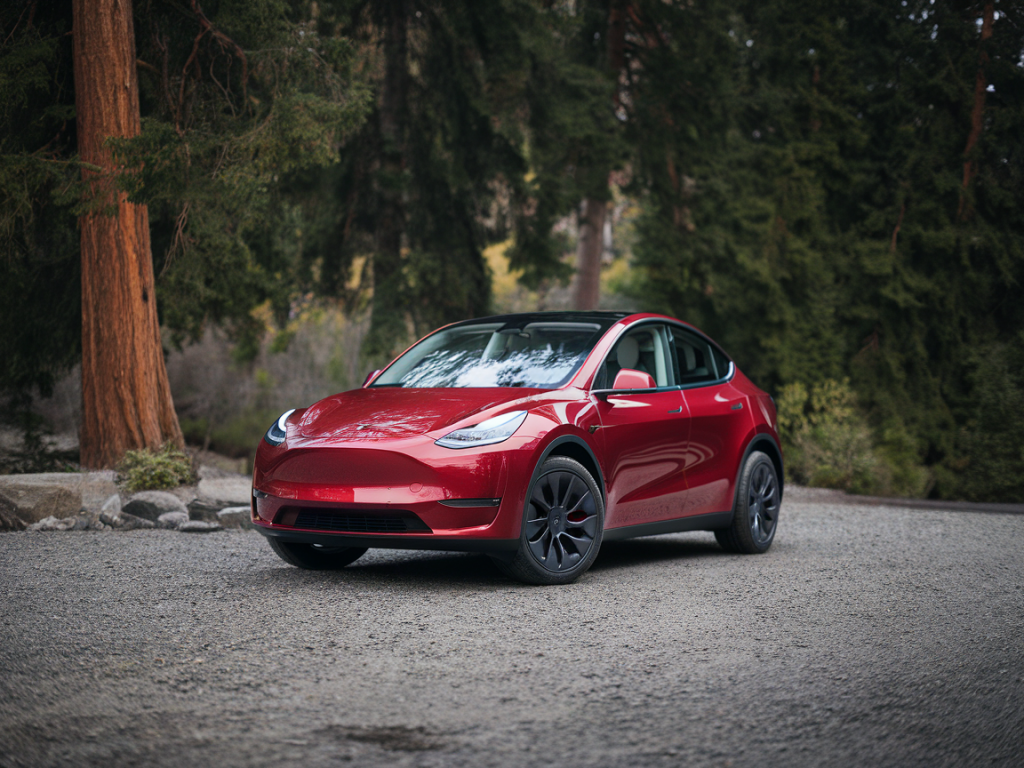
I still remember the first time I walked around a Tesla Model Y on a dealership forecourt—its proportions felt both compact and commanding. If you’re researching dimensions et caractéristiques du SUV électrique Tesla, you’ve likely noticed the same paradox: the Model Y is proportioned like a hatchback stretched into an SUV, and every centimetre matters when you park, load luggage or plan for a family trip.
Why dimensions and characteristics matter before buying an electric SUV
When I compare vehicles, I don’t only look at range or price—I look at real-world usability. For an electric SUV like the Model Y, physical dimensions determine garage fit, parking ease, maneuverability, interior comfort, and cargo versatility. Meanwhile, technical characteristics such as battery capacity, motor configuration, and towing capability directly affect how you’ll use the car day to day.
Key exterior dimensions of the Tesla Model Y (latest baseline figures)
Below are the most relevant exterior dimensions that buyers ask me about. Exact measurements can vary slightly between model years and options (e.g., tow hitch), but these are representative for the 2023–2024 variants:
- Overall length: ~4,750 mm (187.0 in)
- Overall width (excluding mirrors): ~1,920 mm (75.6 in)
- Overall width (including mirrors): ~2,129 mm (83.8 in)
- Overall height: ~1,621 mm (63.8 in)
- Wheelbase: 2,890 mm (113.8 in)
- Ground clearance: ~167 mm (6.6 in) stock (can change with load)
These numbers place the Model Y between the smaller Model 3 sedan and larger mid-size SUVs in terms of interior volume—an intentional design choice by Tesla to maximize usable space without making the car feel bulky on urban streets.
Interior space and cargo: what you can realistically expect
One of the Model Y’s biggest selling points for families is its flexible interior. From my own loading tests and hands-on time with passengers, here’s what stands out:
- Passenger room: The long wheelbase gives generous legroom in the rear—adult passengers can sit comfortably for longer journeys compared to many compact SUVs.
- Seating configurations: Standard 5-seat layout; optional 7-seat third row (tight for adults, best for children or occasional use).
- Cargo capacity: With rear seats up, around 854 litres (30.1 cu ft) behind the second row depending on measurement method. With seats folded, payload space exceeds 2,000 litres (71 cu ft) in some estimates.
- Frunk: Small front trunk for cables and small items—useful for daily convenience but not a replacement for a full boot.
Performance, range and charging characteristics
Physical size influences performance and efficiency. Here are the numbers buyers commonly check:
- Powertrains: Single motor (RWD) or dual motor (AWD) depending on trim; Performance variant has higher output and faster 0–100 km/h time.
- Typical real-world range: Depending on trim and wheel size, expected WLTP/ EPA equivalents range from ~370 km to ~525 km (230–326 miles). Wheels and driving conditions strongly affect this—bigger alloys reduce range.
- 0–100 km/h (0–62 mph): Approx. 3.5–6.9 seconds across performance and long-range trims.
- Charging: Tesla Superchargers provide up to ~250 kW peak (varies by station and battery state), adding significant range in 15–30 minutes under ideal conditions.
For detailed charging curves and EPA ranges across model years, I often consult Tesla’s official specs and independent testers like Edmunds and MotorTrend for real-world verifications.
Safety, driver assistance and standard features
Dimensions and features intersect when assessing visibility, crash performance and ADAS (Advanced Driver Assistance Systems). From the Model Y’s characteristic high seating position to its glass roof, here’s what I note:
- Visibility: Large windshield and slim pillars aid visibility, though wide mirrors are essential in urban lanes.
- Crash tests: Model Y earned top marks in Euro NCAP and IIHS categories in recent assessments—see sources below for details.
- Autopilot / Full Self-Driving (FSD): Autopilot hardware is standard; FSD package remains a software option with evolving capability and regulatory debate.
Practical considerations: parking, garage fit and towing
I often help readers imagine parking scenarios. The Model Y’s exterior length and width make it more manageable than full-size SUVs but larger than compact crossovers. Consider these practical points:
- Garage fit: Standard UK/EU single-car garages should accommodate the Model Y but measure door widths and internal space—remember mirrors and door opening clearance.
- Kerb-to-kerb turning radius: Around 10.2–10.8 metres depending on wheel and tyre setup—easy enough for urban U-turns but not as tight as small hatchbacks.
- Towing capacity: Up to ~1,600 kg (depending on region and specification) with a tow bar—good for light trailers and small caravans; check local Tesla documentation for approvals.
Comparisons: Model Y vs. competitors by dimension and characteristics
When I compare the Model Y to rivals like the Ford Mustang Mach-E, Volkswagen ID.4, or Hyundai Ioniq 5, the differences often come down to subtle trade-offs:
| Model Y | Ford Mustang Mach-E | VW ID.4 | |
|---|---|---|---|
| Length (mm) | ~4,750 | ~4,712 | ~4,584 |
| Wheelbase (mm) | 2,890 | 2,981 | 2,765 |
| Cargo (seats up, litres) | ~854 | ~402–738 (varies) | ~543 |
| Real-world range (km) | ~370–525 | ~334–483 | ~330–520 |
Note: Figures above are approximate and depend on trim, year and testing cycle (EPA/WLTP). Always consult the manufacturer spec sheet for the exact trim you intend to buy.
Numbers I track when choosing a Model Y
When I advise readers, I focus on a short checklist that matters most in daily life:
- Interior measurements: rear legroom, headroom and boot sill height for child seats and prams.
- Wheel & tyre options: 19", 20", 21" wheels—larger wheels reduce range but improve handling and visual stance.
- Charging ecosystem: Supercharger availability near regular routes and destination chargers at homes or workplaces.
- Towing and payload: If you tow, check certified tongue weight and recommended towing packages.
- Software features: Navigation, driver assistance updates and the cost of optional FSD if you consider it.
Real-world stats and owner-reported data
From multiple owner forums and telemetry summaries, I’ve gathered practical statistics that matter beyond brochures:
- Average urban consumption: ~18–22 kWh/100 km (depends on style and climate control use).
- Average highway consumption: ~20–25 kWh/100 km at sustained motorway speeds.
- Observed Supercharging session: ~10–80% charge in ~20–30 minutes at a 150–250 kW charger (state of charge and battery temp influence speed).
Sources I use and recommend for verification
For accuracy I cross-check manufacturer specs with independent tests and regulatory results. Key sources include:
- Tesla Official Specifications — for up-to-date model details and software release notes.
- NHTSA and IIHS — for crash test ratings and safety insights (US-focused).
- Euro NCAP — European safety assessments.
- Edmunds and MotorTrend — for real-world testing and comparisons.
Common buyer questions I answer
Here are typical questions I get and how I reply based on both specs and lived experience:
- Is the Model Y too big for city parking? Not really—its footprint is manageable but measure your typical parking spots, including mirror clearance.
- Can it handle long family trips? Yes—excellent cargo flexibility and charging network make it well-suited to long journeys.
- Are third-row seats usable? For children and occasional use yes; adults will find the space cramped for long trips.
- Do larger wheels ruin range? They reduce range by up to ~10–15% depending on size and tyre selection. Consider trade-offs between comfort, range and aesthetics.
Final practical tips before you decide
When I help someone decide, I recommend these steps:
- Test-fit the car in your garage and usual parking spaces.
- Perform a longer test drive including motorway sections loaded with luggage to evaluate real-world range and comfort.
- Check local Supercharger locations along your common routes using Tesla’s map; plan home charging setup with a qualified electrician.
- Inspect boot and frunk access with strollers or suitcases you actually own—not hypothetical measurements.