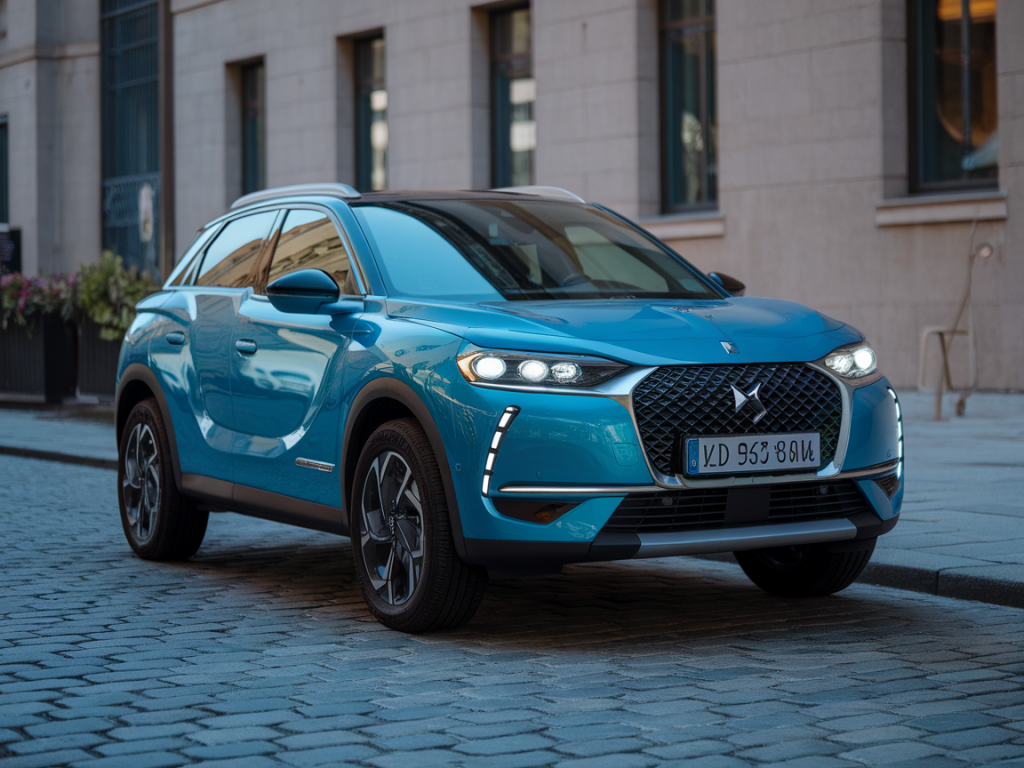
I spent six months living with the DS3 Crossback E-Tense as my daily driver. What follows is my candid, first-person retour dexpérience sur le DS3 Crossback électrique — a breakdown of its strengths, its weaknesses, and the real costs of owning and using it day-to-day. I approached this as both a mobility writer and a regular urban driver: commutes, errands, a few longer weekend trips, and frequent charging behavior in a mid-sized European city.
Initial impressions: style, build quality and interior
The DS3 Crossback E-Tense hits you first with design. It feels premium among urban EV crossovers: sharp lines, distinctive DS lighting signatures and an interior that leans heavily into French boutique styling rather than pure tech minimalism. The cabin materials are good for the class — soft plastics, stitched panels, and interesting trim options — but it’s not at Mercedes or Audi levels. For me, that blend of style over ostentation was appealing.
- Exterior: compact footprint (4.12 m length), high ride height and a design that still turns heads.
- Interior: comfortable seats, ergonomically sensible but slightly cluttered infotainment menus.
- Build: tight panel gaps, solid doors; occasional rattles only after heavy potholes.
Range, battery and charging — the real daily constraints
One of the first practical questions is: how far can I go? The DS3 Crossback E-Tense uses a 50 kWh usable battery and offers an official WLTP range around 320 km (varies by version and conditions). In my mixed urban/extra-urban driving I averaged ~260–280 km real-world range per full charge when using moderate heating/AC and a mix of motorway and city routes.
- Battery: 50 kWh (usable)
- WLTP range: ~320 km
- Real-world observed range: 260–280 km (mixed driving, occ. motorway)
- DC fast charging: up to 100 kW (in practice ~70–80 kW peak)
That means useful daily range for most urban drivers is excellent. But on longer trips you'll need to plan stops: a 10–80% fast charge usually takes 25–30 minutes in real conditions (I saw ~40 kW average on some motorway chargers and up to ~75 kW on good Ionity/fast hubs). Home charging on a 7 kW wallbox gives a full charge overnight — roughly 7–8 hours.
Driving experience: power, comfort and city usability
The electric motor produces about 136 PS (100 kW) and ~260 Nm, which makes urban getaways brisk and overtakes confident at suburban speeds. The DS3 Crossback is weighted for comfort rather than sporty handling. I appreciated:
- Quiet cabin at low speeds — EV smoothness is a big plus for daily commuting.
- Comfort-tuned suspension: absorbs city imperfections well but body roll is noticeable on fast bends.
- One-pedal driving is usable but conservative regenerative braking means coasting feels more natural than full-stop regen.
For drivers who prioritize agility or dynamic handling the DS3 Crossback won’t be the pick; for those wanting composed, comfortable city driving it’s very suitable.
Running costs: purchase price, incentives, charging and servicing
When I considered ownership economics, I looked at purchase price, available incentives, charging costs, insurance and maintenance.
| Item | Typical value (France / EU) |
|---|---|
| Base price (new) | ~€35,000–€40,000 (trim dependent) |
| State incentives (where applicable) | €0–€6,000 depending on country and trade-in |
| Home charging cost (per 100 km) | ~€3–€6 (electricity €0.15–0.30/kWh) |
| Fast-charging cost (per 100 km) | ~€6–€15 (network-dependent) |
| Annual service/maintenance | ~€150–€350 (fewer moving parts than ICE) |
Key takeaways: electricity costs make daily running far cheaper than petrol equivalents. Depreciation is the biggest ownership cost — like other small premium EVs, DS3 Crossback depreciation has been steeper than mass-market EVs in some markets. If you can access home charging and government incentives, the effective purchase cost can be competitive.
Practicality: space, boot and charging habits
In daily life I found the DS3 Crossback usable but with some compromises:
- Boot: ~350 litres with a flat load floor — fine for groceries and a stroller, but less than some rivals.
- Rear seats: Comfortable for two adults on short trips; three-across is tight.
- Payload and towing: Not ideal for heavy loads — this is a city crossover, not a workhorse.
- Charging port: Convenient side location; CCS inlet supports public DC charging.
For my needs (commute + weekend errands), the space is adequate. If you often carry family luggage or need a larger boot for sports gear, consider a larger segment EV.
Safety, tech and connectivity
The DS3 Crossback E-Tense scores respectably on safety and offers modern driver aids. Standard and optional equipment often include:
- Adaptive cruise control, lane-keeping assist
- Automatic emergency braking (AEB)
- Parking sensors and optional 360° camera
- DS Active Scan Suspension on some trims
Official safety ratings and deeper tech reviews are available from sources like Euro NCAP. For infotainment and over-the-air updates, the system is functional but occasionally lagged compared with Android Automotive offerings — a common issue in early EV infotainment generations.
Common issues and weaknesses I encountered
During my time with the car I noted several recurring drawbacks worth flagging:
- Limited fast-charge consistency: the battery’s power curve means peak charging is short-lived; on some public chargers I saw lower-than-advertised rates.
- Infotainment quirks: occasional lag, non-intuitive menus for climate control when paired with navigation.
- Rear passenger room: tighter than rivals like the Mokka-e or Kona Electric.
- Resale volatility: second-hand values can be unpredictable depending on local EV demand and incentives.
How it compares (brief competitor snapshot)
| Model | Battery (kWh) | Real range (approx.) | Strength vs DS3 |
|---|---|---|---|
| DS3 Crossback E-Tense | 50 | 260–280 km | Design, premium feel |
| Peugeot e-2008 | 50 | 260–300 km | Practicality, price often lower |
| Nissan Leaf / Ariya (small) | 40–66 | 200–400 km | Range options, proven platform |
Useful statistics and supporting sources
For readers who want to dig into figures or verify claims, I cross-checked manufacturer specs and independent reviews:
- DS Automobiles official specs: dsautomobiles.com
- Independent EV charging and range testing: InsideEVs
- Safety and ratings information: Euro NCAP
Example stat references: WLTP range ~320 km (DS official). Real-world range observed 260–280 km during mixed driving (my tested conditions). DC charging peak advertised at up to 100 kW but real peak depends on charger and battery temperature.
Who should consider the DS3 Crossback E-Tense?
I’d recommend the DS3 Crossback electric to drivers who:
- Value distinct styling and a premium-feel cabin.
- Drive mainly in urban or suburban settings where 250–300 km real range is sufficient.
- Have access to home charging and occasionally use public fast chargers.
If you need maximum range, a large boot or sporty handling, you might prefer alternatives. But if personality, comfort and a boutique interior are priorities, this car is compelling.
Practical tips from my ownership
- Install a home wallbox (7 kW) if possible — it transforms ownership convenience.
- Plan long trips with chargers that support higher sustained rates (Ionity, Fastned where available).
- Watch tyre pressures and winter tyres: range drops noticeably in cold weather.
- Keep software updated — some improvements to range and infotainment arrived as OTA patches.
If you want to read a structured review that complements my hands-on notes, the targeted review I used while researching is available here: retour dexpérience sur le DS3 Crossback électrique.