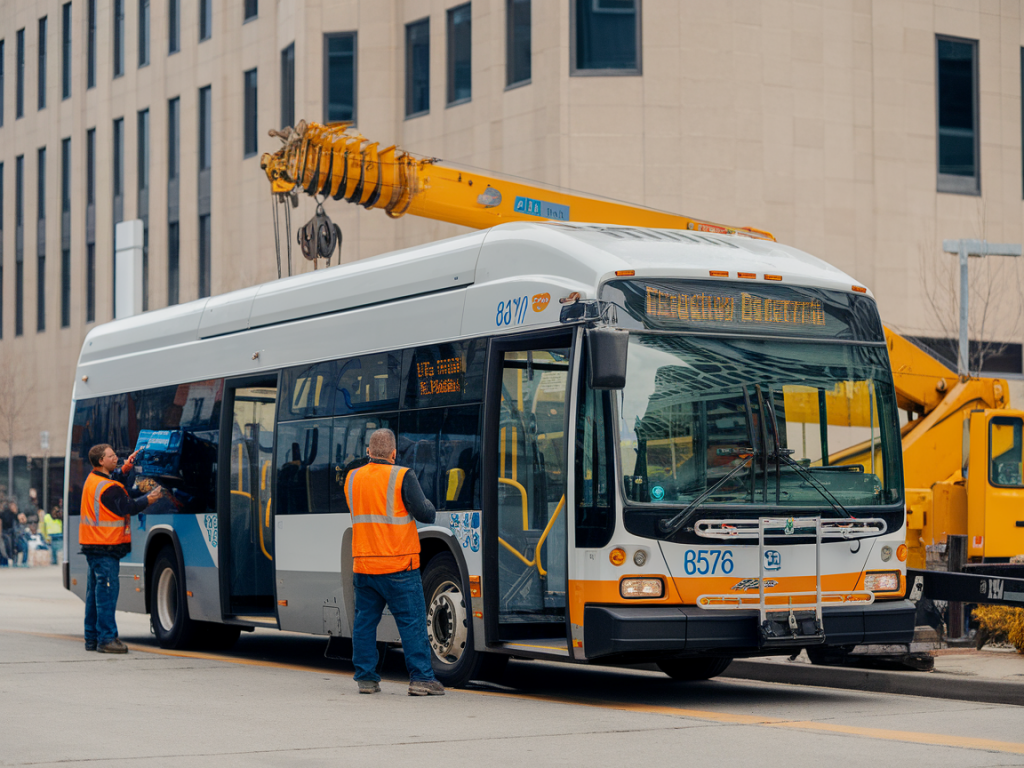
As someone who has followed the electrification of public transit for years, I've been watching a fascinating development: modular solid-state battery retrofit kits designed for legacy electric buses. The pitch is simple and bold — drop in a compact, modular solid-state battery pack to extend range and reduce charging time, while avoiding the downtime and expense of swapping out the entire vehicle. But is this too-good-to-be-true claim realistic? I wanted to dig into the technology, the operational impacts, and the practicalities that transit agencies care about.
What are modular solid-state retrofit kits?
At their core, these kits combine two ideas. First, they use solid-state batteries, which replace the liquid electrolyte in conventional lithium-ion cells with a solid electrolyte. That change promises higher energy density, faster charging, and improved safety. Second, the kits are modular: they come as discrete units that can be mounted on or inside a bus and connected to the vehicle's electrical systems without replacing the whole battery pack.
Companies like Proterra, BYD, and Startups in Europe and Japan are experimenting with form-factor flexibility, while solid-state specialists such as QuantumScape and Solid Power are advancing cells. The idea of combining modularity with solid-state chemistry is relatively new, but it has obvious appeal: retrofit rather than replace.
Can retrofit kits really halve downtime?
When operators talk about "downtime," they usually mean two things: time out of service for charging and time spent in maintenance or repairs. Modular kits can reduce both.
In practice, halving downtime depends on how these kits are integrated. If a fleet currently requires long overnight charging and has limited depot chargers, adding high-energy modular packs capable of rapid charging could indeed halve charging-related downtime. However, this assumes the infrastructure to deliver high-power charging (e.g., pantograph or high-power DC fast chargers) and operational practices that embrace quick opportunity charges.
Will they extend range meaningfully?
Range improvement is where solid-state chemistry shines on paper. Higher energy density means more kWh in the same volume or weight budget. For legacy buses constrained by chassis space or GVW (gross vehicle weight) limits, modular packs can be installed on the roof or underfloor to add capacity without a complete redesign.
Realistically, I've seen estimates ranging from a 20% to 50% range increase, depending on the baseline. If a bus currently has a 150 km range, a well-integrated modular solid-state extension could push it to 180–225 km. That matters for rural or intercity routes where range anxiety and charging logistics are real constraints.
Operational and technical considerations
There are several practical questions I keep hearing from transit managers:
Safety, certification, and lifecycle questions
Agencies won't adopt these kits without clear certifications and warranty terms. Solid-state batteries are promising for reduced fire risk, but certifications must cover crash safety, water ingress, and EMI. Ideally, retrofit vendors will offer modular packs that meet UN ECE R100 (electric powertrain safety) and relevant local standards.
Lifecycle and second-use are also important. Will the modular packs degrade gracefully? Can they be repurposed for stationary storage after vehicle retirement? Vendors who build a circular strategy — second-life repurposing and clear end-of-life recycling — will be more attractive to sustainability-conscious operators.
Cost and ROI — where does the math work?
Upfront costs for modular solid-state kits will initially be high compared with traditional Li-ion modules, especially while solid-state cell production is ramping. But the ROI calculations should include several factors:
I ran a simplified scenario with operators: if a retrofit reduces downtime by 40% and extends range enough to cut 10% of wasted deadhead miles, payback can occur within 4–7 years depending on energy prices and utilization. That timeline becomes more attractive if battery prices decline or if funding schemes (from national clean transit grants) subsidize retrofits.
Examples and early pilots
A few European city transit agencies and private operators are already trialing modular retrofits — not all solid-state yet, but modular lithium systems. One pilot replaced rooftop modules with higher-density packs and achieved a 30% range gain and faster charging during layovers. Another operator used swap-and-charge workflows to keep buses in service during rush hours, cutting missed trips.
These pilots show the operational value of modularity even before solid-state maturity. Once solid-state cells enter the picture, I expect an acceleration of pilot programs focused on rural and long-haul routes where range and fast turnaround are critical.
Questions people frequently ask
Will retrofitting void vehicle warranties? Possibly — that depends on the bus manufacturer and the retrofit vendor. Clear agreements and certified retrofit partners can mitigate warranty issues.
How long until solid-state is production-ready for retrofits? Cell manufacturers aim for commercial-scale production in the mid-2020s to early 2030s. Adoption for retrofits may lag slightly as form-factor and BMS integration mature.
What about maintenance skillsets? Workshop crews will need training on new pack handling, BMS diagnostics, and safety procedures. Modular design makes this training easier because modules are standardized and often designed for safer, tool-less swaps.
How I’d approach a pilot as a transit planner
If I were running a medium-sized fleet, I'd start with a mixed pilot: retrofit 2–4 buses on routes that test the limits of range and depot capacity. I'd pair the rollout with a targeted upgrade to depot chargers and a monitoring program for energy use, cycle life, and operational disruptions. Equally important: involve drivers and technicians early to refine swap procedures and identify human factors that affect turnaround times.
| Current legacy EV | With modular solid-state retrofit | |
|---|---|---|
| Range (example) | 150 km | 180–225 km |
| Downtime for charging | Long overnight + slow opportunity charges | Shorter rapid top-ups; possible swaps |
| Maintenance impact | Higher thermal management load | Lower thermal risk; modular replacements |
In short, modular solid-state retrofit kits have the potential to halve certain kinds of downtime and extend range enough to change operational models for many fleets. The reality, like most technological transitions, will depend on integration quality, infrastructure upgrades, regulatory acceptance, and economies of scale. I'm excited to see more pilots roll out — they’ll be the real proof that retrofit can be a pragmatic bridge to a more flexible, resilient electric bus future.