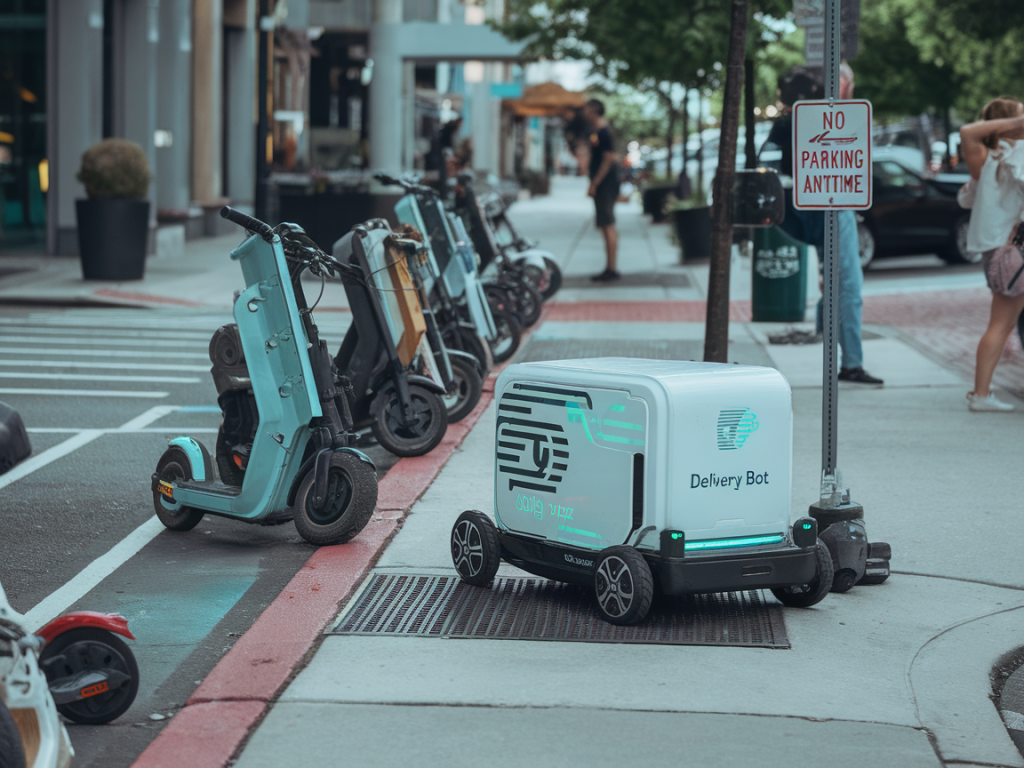
I watch my city’s sidewalks like a nervous parent watches a playground: curious, protective, and a little overwhelmed. Over the past year I’ve seen delivery robots glide past groups of friends, electric scooters weave between people stopping to check their phones, and families with strollers navigate narrow stretches of pavement. The idea that AI could dynamically price curb and sidewalk access—deciding in real time who gets priority—sounds futuristic, but it’s closer than many think. In this piece I want to walk through how AI-powered curb pricing might actually work, the questions people are asking about fairness and safety, and the trade-offs cities will need to wrestle with.
What is AI-powered curb pricing?
At its simplest, AI-powered curb pricing uses algorithms fed by live data (foot traffic, vehicle flows, weather, events) to set monetary or access-based prices for different uses of curb space and sidewalks. Think of it like surge pricing for a ride-hailing app, but applied to who can occupy or pass through a particular curbside lane or sidewalk segment at a given minute—delivery bots, shared e-scooters, loading trucks, ride-hailing pickups, or pedestrians.
Why are cities considering this?
Cities are under pressure to do more with limited public space. The curb is one of the most contested urban assets: it's needed for parking, deliveries, public transit access, restaurant seating, and movement. Traditional zoning and static regulations can’t respond quickly to spikes in demand, like a concert leaving a stadium or a sudden rainstorm that pushes more people onto covered sidewalks. AI and dynamic pricing promise a responsive tool to optimize usage and reduce conflict—but they also raise practical and ethical questions.
How would the system actually decide?
There are several layers to an operational system:
- Sensors and inputs: CCTV cameras with pedestrian counts, IoT sensors in smart lampposts, GPS traces from scooters and delivery fleets, weather APIs, and event schedules feed real-time context.
- AI models: Machine learning models predict congestion, collision risk, and demand elasticity—how sensitive different actors are to price changes.
- Policy constraints: Hard rules set by the city (e.g., school zones, disabled access) act as overrides so the AI can’t price out protected uses like wheelchair access.
- Pricing engine: This computes prices or access tokens for different modes—per-minute fees for e-scooters using the sidewalk, time-windowed curb permits for delivery bots, or priority lanes for pedestrians during peak hours.
- Enforcement and collection: Automated cameras and license tags, digital wallets integrated with scooter apps and delivery fleets, and parking enforcement officers ensure compliance.
Who stands to win or lose?
When I imagine different scenarios, four main groups pop up:
- Pedestrians: Ideally pedestrians would get safer, clearer routes during busy times. But if the system monetizes sidewalk priority, there’s a real risk that vulnerable users could be squeezed out unless protections are absolute.
- Delivery companies and gig couriers: They might face higher costs during peak windows, which could be passed to consumers or drivers. On the other hand, better-managed loading zones can speed up deliveries and reduce illegal double-parking.
- Micromobility operators (e-scooters, dockless bikes): Dynamic pricing could encourage them to avoid congested sidewalks and instead use bike lanes, but if bike infrastructure is poor they’ll push back.
- Local businesses: Restaurants and shops may gain from more predictable loading windows, but curb fees could increase costs for small merchants that rely on rapid deliveries.
Can AI make the right ethical trade-offs?
This question is at the heart of public concern. People are afraid of a system that simply “prices out” people who aren’t able to pay. To avoid that, cities must bake equity into both the objectives and constraints of the AI:
- Guarantee free and accessible pedestrian space in designated zones (near hospitals, schools, transit stops).
- Apply progressive pricing—lower rates for essential services or small local businesses, higher rates for high-volume commercial fleets.
- Use revenue for equitable reinvestment: fund curbside accessibility upgrades, subsidize last-mile delivery consolidation, or improve public transit.
- Include human-in-the-loop oversight for disputes, exceptions, and appeals.
What about safety—won’t bots and scooters still endanger people?
AI can actually reduce conflict if paired with speed limits, geo-fencing, and lane allocation. For example, during peak pedestrian hours an AI might restrict e-scooter sidewalk use entirely and dynamically re-route delivery bots to designated loading bays. Companies like Starship Technologies and Nuro already use geofencing to enforce sidewalks vs. road behavior. The challenge is enforcement and the physical environment: narrow sidewalks, uneven curb cuts, and ongoing construction can create pinch points where no pricing can sufficiently mitigate risk without infrastructure change.
How will pricing be enforced?
Enforcement will combine automatic and manual mechanisms:
- Automatic billing linked to device IDs (scooter accounts, delivery robot registration) and license plates for vehicles.
- Compliance cameras and computer vision to detect illegal sidewalk riding or unauthorized loading.
- On-the-ground inspectors for disputes, broken sensors, or unusual events.
- Integration with mobility platform APIs (e.g., Bird, Lime, Uber, Deliveroo) so operators can receive and act on pricing signals instantly.
What data and privacy concerns arise?
I’m often asked: won’t this system surveil us? Yes—any dynamically responsive system requires data. Responsible design requires:
- Minimizing personal data retention: use aggregated counts rather than individual trajectories where possible.
- Edge processing of video feeds to extract anonymous density metrics rather than storing raw footage.
- Clear public transparency about what is collected, who can access it, and for how long.
- Independent audits of algorithms for bias and fairness.
What kinds of pricing models might cities use?
Several approaches are being discussed in pilot projects:
- Time-of-day surge pricing: Higher fees during peak pedestrian hours or event exits.
- Congestion-based pricing: Fees proportional to real-time density and collision risk.
- Permit-based access: Limited paid permits for delivery windows, auctioned or allocated to consolidate trips.
- Credit systems: Residents and vulnerable users receive free or subsidized curb credits; commercial operators pay market rates.
What are plausible near-term pilots?
From conversations with urban planners and startups, pilots will likely be incremental and bounded. Examples I can imagine:
- Commercial corridors where delivery demand is high—dynamic loading windows priced to incentivize off-peak deliveries and shared consolidation points.
- Transit station approaches where pedestrian volumes surge—temporary micromobility restrictions with pricing to discourage illegal sidewalk use.
- Event venues where temporary curb reallocation is coordinated via an app to delivery platforms and micromobility operators.
How should cities govern these systems?
My view is that governance must be proactive and multi-stakeholder:
- Set clear mandates: safety, accessibility, and equity should rank above revenue generation.
- Open data and model transparency so citizens can see how decisions are made.
- Independent oversight committees to review outcomes and tune the algorithmic objectives.
- Sunset clauses and iterative pilots that allow rollback if negative effects appear.
What should citizens ask their local governments?
If you care about how your sidewalk is managed, here are concrete questions to raise at meetings or consultations:
- Which uses of the curb are protected from pricing (e.g., pedestrian access, accessibility ramps)?
- How will revenues be used—will they fund accessibility improvements or go to general budgets?
- Who audits the algorithm and how can residents appeal decisions?
- What data is collected, how long is it retained, and can citizens access it?
- How will pilots be measured—what counts as success or failure?
Walking home the other day, I pictured a future in which the sidewalk felt calm and ordered rather than chaotic. In that scenario, AI nudges delivery schedules to quieter hours, scooters stay out of dense pedestrian flows, and revenue from curb pricing funds wider pavements and safer crossings. But for that to happen, cities must prioritize people-first policies, robust privacy protections, and transparent governance. Otherwise, we risk building a system that optimizes for the highest bidder rather than the public good.