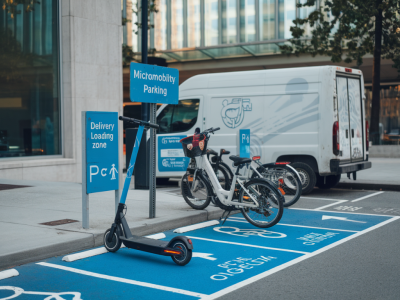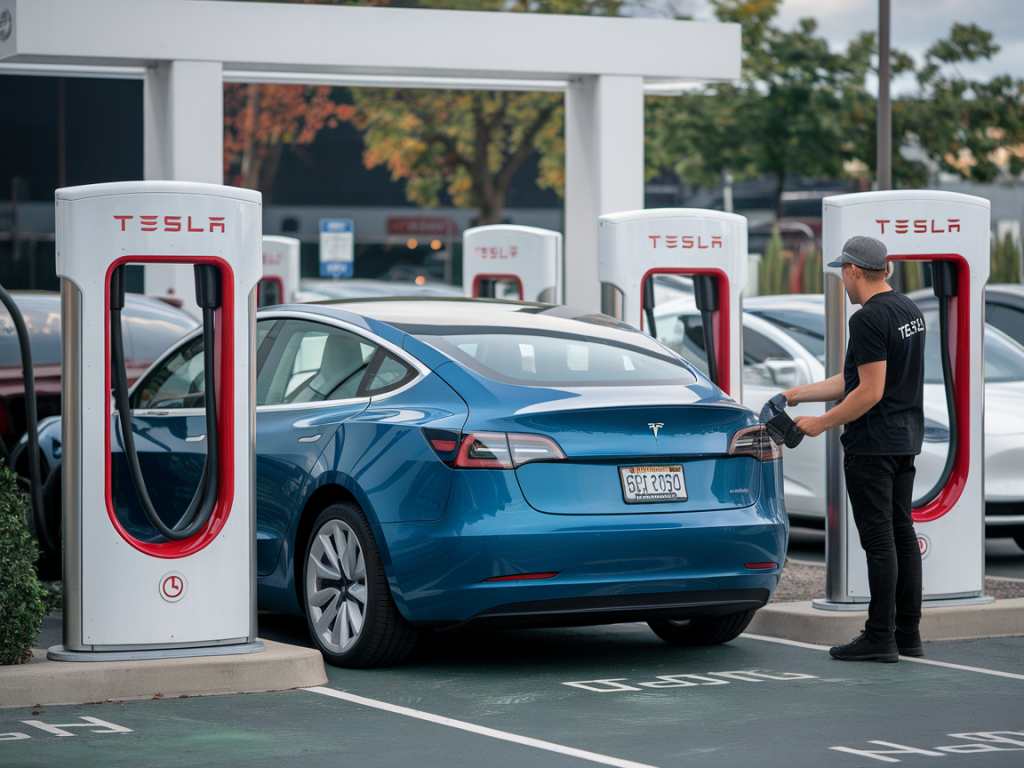
I keep thinking about the same image: a busy city street where a taxi or a delivery van pulls up to a compact kiosk, a technician or a robot swaps the depleted battery in a few minutes, and the vehicle is back on the road. As someone who follows mobility trends closely at Mobility News, I'm fascinated by whether Tesla's battery swap kiosks could really cut downtime for urban taxi and delivery fleets — and what it would take to make that vision practical.
Why battery swapping matters for fleets
When I talk to fleet managers — from ride-hailing companies to urban couriers — the conversation always comes back to one metric: uptime. Every minute a vehicle is off the road is lost revenue. Charging can take anywhere from 30 minutes (fast DC charging) to several hours (AC), depending on battery size and state of charge. For high-utilization vehicles like taxis or last-mile delivery vans, that's a lot of time.
Battery swapping promises to turn that on its head. Instead of waiting for a battery to recharge, you replace it with a fully charged unit in what could be a matter of minutes. For fleets operating on tight schedules and predictable routes, that could mean dramatic improvements in availability and schedule reliability.
What we've seen so far: lessons from past and current efforts
Tesla briefly demonstrated a battery swap system in 2013, swapping Model S packs in about 90 seconds. It generated headlines but never went into wide deployment. Meanwhile, companies like NIO in China have built a commercial battery swap network for passenger EVs, claiming swaps in under five minutes and already serving thousands of vehicles.
From these examples, I draw three important lessons:
Operational challenges for urban taxi and delivery fleets
In my conversations with logistics managers, a handful of practical concerns consistently comes up:
Economics: does swap pay off?
Cost is the make-or-break question. I run through the numbers in my head and with operators: kiosk construction and maintenance, battery inventory, energy costs, and payments to operators all stack up. But there are offsetting benefits.
| Cost factor | Swap model impact |
|---|---|
| Kiosk installation | High upfront capex, amortized over heavy utilization |
| Battery inventory | Higher working capital (multiple batteries per vehicle) but potential for centralized lifecycle management |
| Energy & charging | Opportunity for time-shifting charging to off-peak, lower per-kWh costs |
| Labor/automation | Costs vary; automated kiosks reduce operating labor but raise capex |
For high-mileage vehicles, the math can tilt in favor of swapping. If an urban taxi or courier makes dozens of trips per day, losing even an hour for charging can be more expensive than the per-swap fee plus kiosk amortization. Additionally, if the swap operator owns the batteries (as in BaaS), fleets avoid large battery replacement expenses and can budget for predictable per-minute or per-swap fees.
Technical and software integration
I often emphasize that battery swapping is as much a software problem as a hardware one. For fleets, integrating swap availability into dispatching systems would be essential. Imagine a fleet management dashboard that routes a courier to a swap kiosk at an optimal point in their route, factoring in kiosk queue, battery state, and delivery deadlines.
Authentication, billing, and battery health tracking need backend systems that communicate with both vehicle telematics and kiosk controllers. Tesla has deep software experience and an existing vehicle ecosystem that could, in theory, make this smoother than a third-party approach. But it still requires significant product and API development.
Battery lifecycle and sustainability considerations
One question I come back to is battery life. Critics worry that frequent swaps and mixed battery use could complicate battery lifespan tracking. Proponents say it offers a chance to centrally manage charging profiles, thermal conditioning, and balanced cycling — potentially extending useful life compared with ad hoc, high-power fast charging across hundreds of vehicles.
There's also an environmental angle: centralized swapping sites can optimize charging times for grid emissions, deploy renewable energy behind-the-meter, and implement second-life or recycling workflows for retiring batteries. If executed thoughtfully, swap networks could therefore support sustainability goals for fleets.
Real-world use cases and pilot ideas
If I were advising a city taxi operator or a major delivery company, I’d suggest a phased pilot rather than a broad rollout. Pilots should focus on:
Such pilots would let operators measure true time-savings, kiosk utilization, per-swap costs, and maintenance overhead. They'd also reveal user experience issues that are hard to predict in theory.
Regulatory and market considerations
I don't shy away from policy in my reporting. City governments may need to update zoning and safety regulations to accommodate swap kiosks. Standard-setting bodies could help by defining form factors and communication protocols, reducing fragmentation risk.
Market dynamics are also important. If Tesla were to open swap tech to partners or standardize it across vehicle models intended for fleet use, adoption would be much easier. On the other hand, proprietary approaches limit uptake to vertical integrations where a single company controls vehicle, battery, and kiosk ecosystems — which is how NIO succeeded in China.
Ultimately, whether Tesla's battery swap kiosks can cut downtime for urban taxi and delivery fleets will depend on a combination of technology, economics, and urban planning. From where I stand, the potential is real, especially for dense, high-utilization fleets — but getting there requires careful pilots, strong standardization, and business models (like BaaS) that make the economics work for both fleet operators and swap providers.