When I first rode an autonomous shuttle during a business trip a few years ago, I remember feeling both excited and oddly vulnerable—excited about the promise of driverless transit, vulnerable because I couldn't see how the vehicle was perceiving the world around it. Since then, one of the clearest trends I've followed is how lidar startups such as Ouster are transforming that invisible perception into something tangible: safer, more reliable, and much less expensive hardware for autonomous shuttles and other mobility platforms.
Why lidar matters for autonomous shuttles
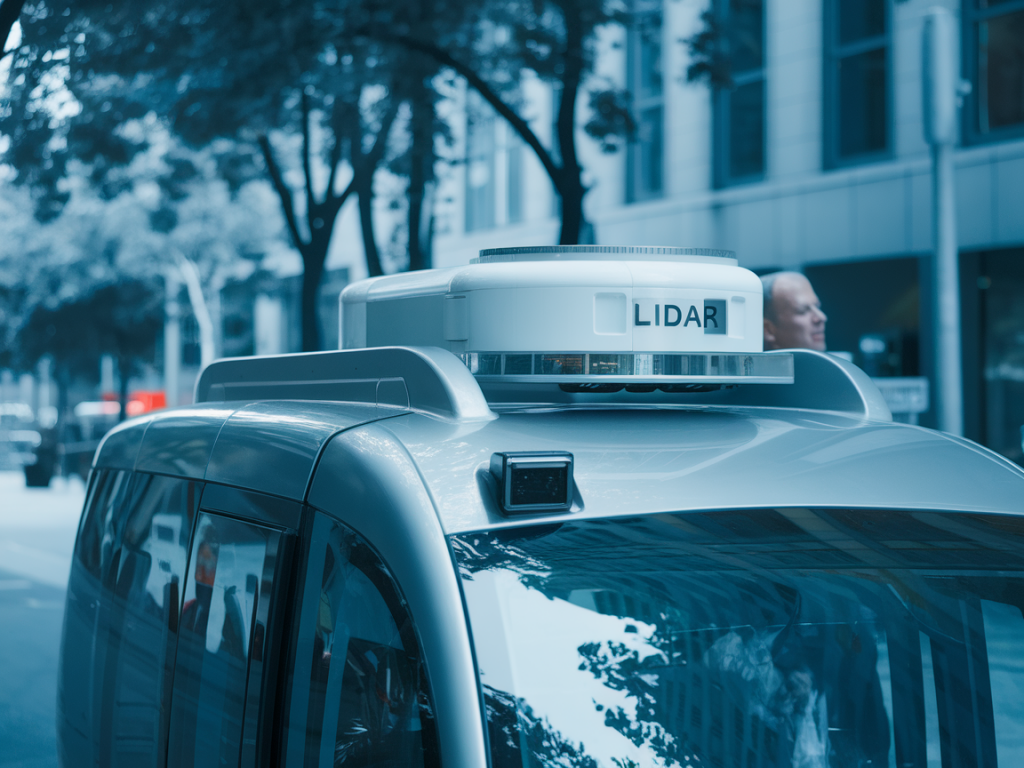
Lidar (light detection and ranging) is often described as the eyes of autonomous vehicles. It uses laser pulses to create high-resolution 3D maps of a vehicle’s surroundings. For shuttles that operate in mixed environments—pedestrians, cyclists, parked cars, complicated urban furniture—having precise distance and shape data is critical.
People often ask: can't cameras and radar do the job? The short answer is: partly. Cameras provide rich semantic information (color, signs, traffic lights), radar offers reliable velocity detection in poor weather, but lidar provides dense spatial accuracy and a reliable geometric picture of the world that helps vehicles detect, localize, and predict dynamic obstacles with high fidelity. Combining these sensors is how we get robust perception stacks, but lidar disproportionately improves safety margins.
How startups like Ouster are changing the game
Historically, lidar was prohibitively expensive—think tens of thousands of dollars per unit—and mechanically complex, which limited deployment to research projects and high-end autonomous prototypes. Startups such as Ouster, Velodyne, Luminar and Innoviz challenged that status quo by rethinking hardware design, manufacturability and business models. Here’s what they changed:
- Solid-state designs and digital architectures: Ouster’s sensors shifted from expensive spinning mechanical systems to more compact, solid-state or simplified rotating designs with digital signal processing. This reduces failure points and manufacturing cost.
- Economies of scale: By designing sensors for high-volume production and partnering with automotive and mobility OEMs, these startups have driven per-unit price down—making it feasible to equip fleets of shuttles rather than single prototypes.
- Software-enabled features: Modern lidar firms provide not only hardware but also software tools and SDKs to calibrate, visualize and integrate point clouds into autonomy stacks. That reduces integration time for shuttle operators.
- Customization for mobility use-cases: Startups learned to tailor performance—range, resolution, frame rate—to the needs of shuttles that operate at low to moderate speeds in urban settings rather than highway autonomy requirements.
What “safer and cheaper” looks like in practice
In practical terms, when a shuttle operator equips vehicles with modern lidar sensors, several measurable improvements emerge:
- Better obstacle detection at close range: High-resolution lidars can detect small, low-lying objects—children’s scooters, pets—that cameras might miss at certain angles.
- Improved localization: Point-cloud matching against pre-mapped environments helps shuttles maintain precise lane positions and handle complex intersections.
- Reduced false positives and false negatives: With clearer 3D geometry, perception models can better distinguish between parked vehicles and moving obstacles, reducing unnecessary hard braking or risky passes.
- Lower total cost of ownership (TCO): Cheaper lidar units and lower maintenance (no complex moving parts) mean operators can deploy more vehicles for the same capital outlay, accelerating scaling of shuttle services.
Real-world deployments: examples that matter
We’ve seen several interesting deployments that illustrate these benefits. For instance, autonomous shuttle pilots in European and North American cities often use lidar-equipped vehicles to operate on fixed routes in mixed traffic. Companies like EasyMile and Navya have experimented with lidar integrations to enhance perception, while mobility-as-a-service operators partner with lidar providers for retrofit projects.
Ouster, specifically, has been prominent in partnerships with fleet operators and OEMs aiming to make autonomy commercially viable. Their sensors—known for modular form factors and digital interfaces—are used not just on shuttles but across logistics robots and delivery vehicles, creating a common perception platform that reduces integration friction.
Key technical trade-offs and how startups address them
No sensor is perfect, and lidar has its own limitations: performance can be affected by heavy rain, snow, or fog; certain reflectivity surfaces are challenging; and high-resolution point clouds generate lots of data requiring powerful compute. Startups address these trade-offs by:
- Adaptive scanning and smart filtering: Adjusting laser power and scan patterns based on environmental conditions to prioritize reliability.
- Sensor fusion software: Combining lidar with cameras and radar so the weaknesses of one are compensated by strengths of others.
- Edge processing and compression: On-sensor preprocessing reduces bandwidth and CPU burden on vehicle computers.
Economics: how costs have fallen and why it matters
When lidar units were priced above $50,000, scaling a 50-vehicle shuttle fleet was unrealistic. Today, thanks to digital architectures and mass manufacturing, mid- and low-range lidar units can cost a few thousand dollars, sometimes lower depending on volume. That price drop has cascading effects:
- Lower upfront capital required for pilots and commercial fleets.
- Feasible redundancy: operators can include multiple sensors for safety without exploding costs.
- Faster iteration cycles for startups and municipal pilots—cheaper sensors mean cheaper failure during early testing, which is essential for innovation.
What readers often ask me about integration and regulation
One frequent question I get is: “How hard is it to retrofit existing shuttles with new lidar?” Retrofitting is doable but non-trivial. You must consider sensor placement for optimal field of view, wiring and compute integration, software compatibilities, and regulatory approvals. That’s why companies offering complete integration packages are valuable to operators.
Another question: “Are regulators keeping up?” Regulatory frameworks vary widely by country and city. Many municipalities allow limited trials under controlled conditions, and increasingly regulators expect demonstrable safety cases—detailed data showing how lidar-equipped perception mitigates risk. In that sense, widespread adoption of robust lidar can help operators present stronger safety cases to regulators.
Quick comparison (example specs)
| Parameter | Legacy Mechanical Lidar | Modern Digital Lidar (e.g., Ouster) |
|---|---|---|
| Typical Price (per unit) | $30k–$100k | $2k–$15k |
| Lifetime & Maintenance | Moving parts—higher maintenance | Solid-state/simpler moving parts—lower maintenance |
| Data Output | High-res but analog-heavy | High-res digital point clouds with onboard pre-processing |
| Integration Ease | Complex | Designed for automotive/mobility integration |
What I watch next
I'm paying attention to three trends that will further shape lidar's role in autonomous shuttles: ongoing cost reduction as volumes rise, better weather robustness (either through multimodal fusion or improved optics), and deeper software ecosystems that make sensor data easy to consume by autonomy stacks. Also, consolidation in the market might favor vendors who can deliver full-stack solutions—hardware, drivers, SDKs and long-term support.
For anyone running or considering an autonomous shuttle service, the message is clear: lidar is no longer a luxury. It's becoming a practical enabler of safer and more cost-effective operations. And startups like Ouster are a big reason why that shift is happening now rather than sometime in the distant future.