I’ve been watching micromobility evolve for years, and one persistent operational headache keeps coming up: keeping e-scooters and e-bikes charged and available throughout the day without resorting to carbon-heavy logistics. Modular urban microgrids offer a practical, scalable answer. In this piece I’ll walk you through what they are, how they work in real cities, and why operators, city planners and riders should care.
What I mean by modular urban microgrids
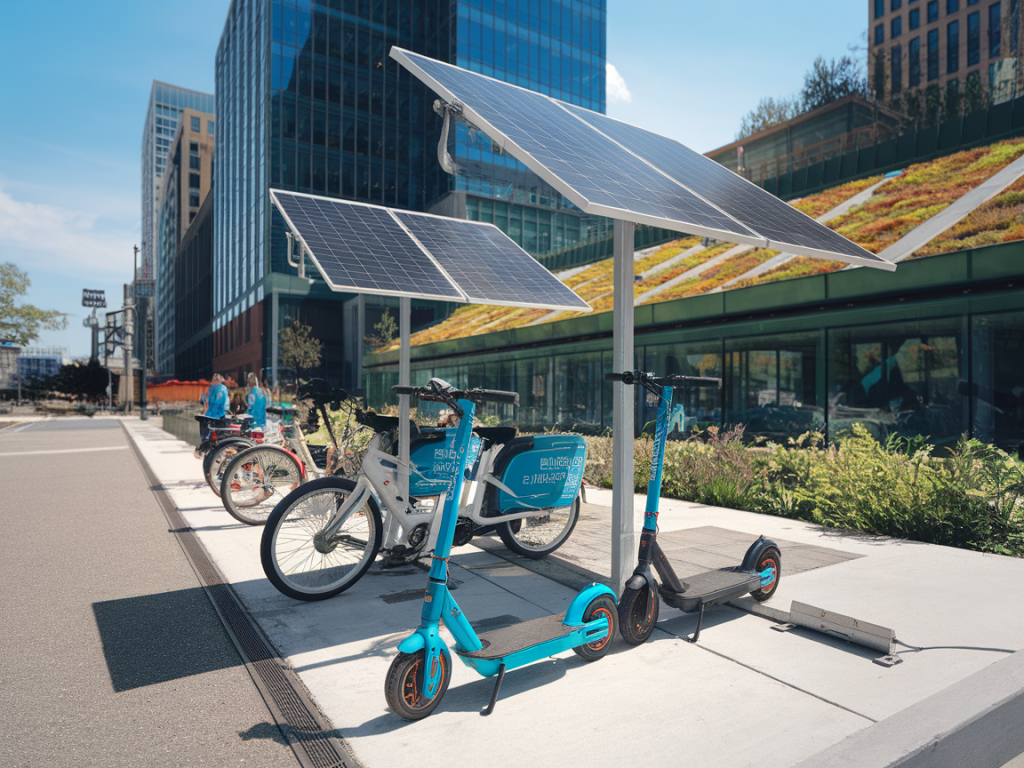
When I say “modular urban microgrid,” I’m referring to compact, self-contained energy systems that combine local electricity generation (often solar), battery storage, smart power electronics and intelligent control software. They are modular because you can scale capacity up or down by snapping additional units together — like adding LEGO blocks to a city’s energy network. Placed strategically around neighborhoods, transit hubs and commercial corridors, these microgrids can provide on-site charging for micromobility fleets such as e-scooters and e-bikes.
Why this matters for micromobility
Operationally, the current model for many shared micromobility providers involves nightly collection: vans pick up devices, bring them to a warehouse to charge, then redeploy them. This model is expensive, inefficient, and often environmentally counterproductive. I’ve spoken to operators where redistribution and charging account for up to 50% of operating costs. Modular microgrids change that story.
- Reduced logistics: Devices can be swapped or charged on the street, reducing collection trips.
- Better availability: With distributed charging, scooters and bikes can be topped up midday to support high-demand windows.
- Lower emissions: Using local solar and storage cuts diesel van miles and leverages renewable electrons.
- Resilience: Microgrids can operate during grid outages, keeping critical mobility services running.
How a typical deployment looks
Usually I imagine a few core components:
- Solar canopy or rooftop panels to harvest daytime energy.
- Battery banks sized for local needs (from a few kWh up to hundreds of kWh for big hubs).
- Smart inverters and controllers that manage charging, grid interaction and peak-shaving.
- Modular charging docks or universal smart chargers compatible with multiple scooter/bike models.
- Fleet management integration — the software hooks into operator platforms for status, billing and predictive dispatch.
These units can be installed in bus stops, bike-share stations, parking islands, or on sidewalks where space allows. I’ve seen pilot projects using repurposed shipping containers and bespoke kiosks; the look can be utilitarian or designed to fit local streetscapes.
Operational modes that make the difference
There are a few modes I find particularly compelling:
- Top-up charging: Short bursts of high-power charge during daytime pauses. An e-scooter that gains 20–30% battery in 20–30 minutes can be back in service for peak hours.
- Swap-and-go stations: Instead of charging devices, riders or field staff swap depleted batteries for charged ones. This works well where batteries are removable (some e-bike systems and modular scooters use this).
- Overnight charging with local renewables: Units store daytime solar energy to charge devices overnight or to serve morning demand, reducing grid draw during peak times.
- Grid-supportive operation: Microgrids can export to the local distribution network or provide demand response, earning revenue and smoothing grid load.
Integration with fleet management and software
Hardware alone won’t cut it. I’ve seen the best microgrid pilots pair closely with fleet-management platforms (like those built by Veo, Lime, Bird or smaller local operators) to coordinate charging intelligently:
- Charging prioritization: devices predicted to run out during peak hours get priority.
- Dynamic pricing: operators can incentivize riders to dock at certain microgrid stations during surplus-solar periods.
- Predictive dispatch: software can route field technicians only when needed, based on live battery telemetry.
Real-world examples and vendors
While full-scale deployments are still emerging, several pilots and vendors give a clear proof-of-concept:
- Urban solar canopies with integrated chargers — firms like Envision Solar (now Beam Global) and smaller European companies have piloted similar concepts for e-vehicle charging.
- Battery-swapping models — companies such as Gogoro in Taiwan made swapping mainstream for scooters; in micromobility, modular battery packs and swap kiosks are gaining traction.
- Smart-energy microgrid providers — vendors such as Siemens, Schneider Electric and numerous startups offer modular energy storage and microgrid controllers that can be adapted for micromobility.
Challenges I’ve encountered
Deploying modular microgrids is not a silver bullet — here are a few hurdles that require attention:
- Standardization: There’s no single connector or battery form factor across all scooters and e-bikes. Universal chargers and swappable battery standards would accelerate adoption.
- Urban space and permitting: Local regulations and sidewalk space constraints can slow rollouts. Municipal buy-in and design-sensitive installations are key.
- Initial costs: Upfront CAPEX for solar, batteries and control hardware can be significant. Business models often rely on shared funding: operators, cities and advertisers.
- Maintenance: Batteries and electronics need upkeep; harsh weather and vandalism are non-trivial concerns.
Business models that work
From my conversations with operators and cities, a few viable commercial approaches stand out:
- Operator-funded kiosks: Shared-mobility firms fund installations to reduce operational costs and increase fleet uptime.
- Public-private partnerships: Cities provide space or subsidies; operators or energy companies build and run microgrids.
- Ad-supported or multi-use revenue: Charging kiosks double as advertising spaces or community amenities (Wi‑Fi, ticket machines), creating diversified revenue.
- Energy-as-a-service: Microgrid providers own the infrastructure and sell charging/energy to operators under subscription models.
Environmental and social upside
What excites me most is the sustainability story. Microgrids paired with solar reduce lifecycle emissions by cutting diesel van miles and using renewable electricity. They also enable equitable access: strategically placing charging hubs in underserved neighborhoods keeps micromobility available to those who rely on it most. Finally, by reducing vehicle downtime, they make shared fleets more convenient and competitive with private car trips.
What cities and operators can do now
If you’re a city planner or a micromobility operator looking to pilot microgrids, here are practical steps I recommend:
- Start small: pilot one neighborhood hub, measure uptime, emissions savings and operational cost changes.
- Engage residents early: design kiosks that meet local needs (seating, lighting, clear signage).
- Work on interoperability: encourage vendors to adopt universal connectors and open APIs for fleet integration.
- Consider mixed-use funding: combine municipal grants, operator investment and advertising revenue to cover CAPEX.
| Key metric to track | Why it matters |
| Fleet uptime | Direct indicator of service improvement |
| Reduction in van miles | Shows operational cost and emissions savings |
| Energy sourced from renewables | Measures sustainability impact |
I’m convinced that modular urban microgrids are a practical piece of the micromobility puzzle. They won’t replace good fleet design or policy, but when deployed thoughtfully they can dramatically reduce costs, emissions and downtime. I’ll be following pilots closely and reporting on new deployments—from modular swap stations inspired by Gogoro to solar-powered kiosks in European cities—so stay tuned to Mobility News for updates and deeper dives into the technology and business models shaping this space.