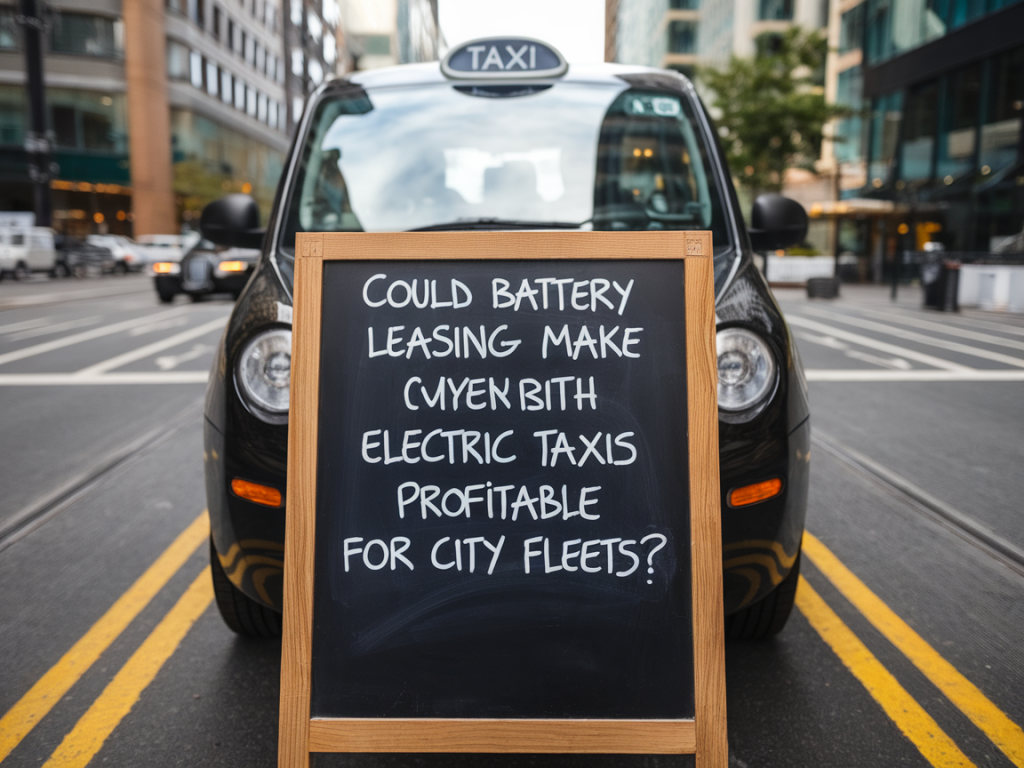
As someone who watches cities and fleets adapt to electric mobility every day, I keep coming back to one big question: can battery leasing make electric taxis genuinely profitable for city fleets? It sounds like a financing trick, but it touches on the core economics of electric vehicles (EVs): upfront cost, downtime, battery degradation, and the ability to scale operations without getting hammered by capital expenditure.
Why battery cost matters for taxi fleets
When a taxi company buys a vehicle, the battery is often the single most expensive component. For many electric models, the battery can represent 30–40% of the retail price. That’s particularly painful for taxi operators who run high-mileage vehicles and need to keep replacement cycles predictable. I’ve seen fleet managers hesitate to electrify precisely because of that big lump-sum investment and anxiety around battery lifespan.
Battery leasing decouples the battery from the vehicle purchase. Instead of buying a car with a battery included, the fleet buys or leases the vehicle and pays a monthly fee for the battery — sometimes with a guaranteed performance level. It’s similar to how companies lease printers or servers: the hardware is one thing, the consumable/critical component is managed separately.
How battery leasing models work
There are several flavors of battery-as-a-service (BaaS):
Each model shifts risk differently. For fleets, the appeal is obvious: predictable operating costs, reduced risk of sudden capital replacement, and improved residual value of the vehicle because the battery is not on the owner’s balance sheet.
Key benefits for taxi fleets
What keeps fleet managers awake at night?
Despite the benefits, there are important trade-offs and open questions that operators must evaluate:
Practical numbers — ownership vs leasing (example)
| Ownership | Battery leasing | |
|---|---|---|
| Upfront vehicle cost | £40,000 | £30,000 (vehicle only) |
| Monthly battery fee | £0 | £200 |
| Battery replacement risk | Operator bears full risk | Lessor bears most risk |
| Residual value uncertainty | High (battery degradation) | Lower (battery owned by lessor) |
| Example 5-year TCO (simplified) | £40,000 + maintenance + replacement risk | £30,000 + (60 × £200 = £12,000) + maintenance |
This simplified table shows how leasing can look attractive on a cash-flow basis. But the true TCO must include electricity costs, downtime, charging infrastructure, and potential penalties or incentives from the lessor contract.
Real-world pilots and examples
Renault once offered a battery leasing program for the Zoe, which helped early adopters lower the upfront price. NIO’s BaaS and swap stations demonstrate technical feasibility for fast turnaround, though their model relies on standardised battery packs and a dense swap network — conditions not common for most city taxis.
I’ve also followed pilots where taxi fleets partner with energy firms: the battery lessor works with the charging operator to optimise smart charging, reducing energy costs and smoothing peak demand. That integration is a real advantage because high-mileage vehicles can create large, concentrated charging loads that strain local grids and increase energy bills if not managed.
Questions fleet operators should ask before signing a lease
How policy and scale change the math
Government incentives, low-interest financing, and access to public charging can markedly change whether leasing is attractive. In cities where electricity prices are capped for public fleets, or where grants reduce the vehicle price, ownership may regain appeal. Conversely, in places where capital is scarce and fleets need to scale quickly, leasing can be the difference between launching an electric fleet now or waiting several years.
Finally, scale matters for lessors too. A big fleet contract makes battery pooling, remanufacture, and second-life markets economically viable, which lowers costs for everyone. That’s why I think large taxi operators and municipal procurement are the most promising early customers for BaaS models.
Battery leasing isn’t a silver bullet, but it’s a pragmatic tool. For many city fleets, especially those that need predictable expenses, rapid scale-up, and reduced risk on battery performance, it can tip the profitability equation in favour of electrification — provided contracts are well-structured and integrated with charging and operational planning.