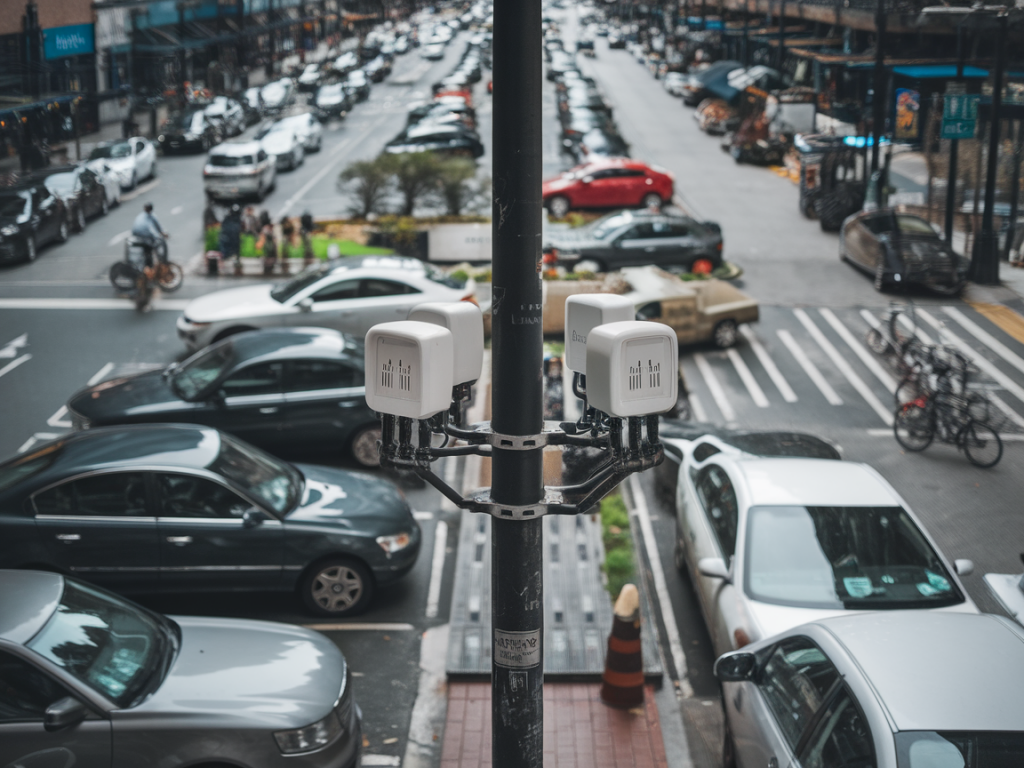
Why curb management matters more than ever
I’ve spent years watching downtowns transform: curb lanes that used to serve private cars are now contested real estate for ride-hails, grocery deliveries, e‑scooters and dockless bikes. The result is predictable—double-parked vans, clogged bike lanes, angry drivers, and pedestrians navigating a patchwork of temporary micromobility parking. From an urban mobility perspective, the curb has become the new bottleneck.
It’s easy to romanticize autonomous cars or the next EV. But in practice, the war over curb access creates daily friction that undermines all of those innovations. If we want the streets to actually function, we need smarter ways to allocate and manage curb space in real time. That’s where AI-driven curb management comes in—and why I think it could be the missing piece for dense downtowns.
What do we mean by "AI-driven curb management"?
When I say AI-driven curb management, I’m talking about systems that combine sensors, cameras, historical data, real-time feeds (ride-hail demand, deliveries, micromobility fleets), and intelligent algorithms to dynamically assign curb space. This goes far beyond static signage and fixed loading zones. The system can:
- Predict demand spikes by time of day, day of week, weather and events
- Allocate curb space dynamically—e.g., temporary loading zones for 15 minutes, pop-up micromobility parking areas, or prioritized lanes for transit
- Enforce rules with automated detection and alerts to drivers and fleet managers
- Coordinate multiple operators (Uber, Lyft, Amazon, local bike-share) to reduce conflicts
How AI actually reduces "curb chaos"
There’s a lot of hype around AI, but the value here is practical. I’ve seen three tangible ways these systems can improve downtowns:
- Proactive predict-and-allocate: Using historical patterns and live feeds, AI can pre-emptively create temporary pickup/drop-off zones where demand will spike—think outside a stadium or during lunchtime near office buildings.
- Conflict resolution across modes: Algorithms can balance competing needs—prioritizing delivery trucks for a short period while rerouting micromobility parking a block over, for instance. That reduces illegal parking and keeps bike lanes clear.
- Faster turnover and revenue optimization: Dynamic pricing or permit incentives can encourage quicker turnover for high-value curb slots, reducing dwell times and encouraging more efficient delivery consolidation.
Real-world building blocks: sensors, data, and integrations
For AI-driven curb management to work, several technical pieces must be integrated. From what I’ve seen, successful pilots combine:
- IoT sensors and curbside cameras that detect occupancy and vehicle type
- Open APIs connecting city permitting systems with private fleet operators
- Machine learning models trained on travel patterns, delivery schedules, and event calendars
- User-facing apps that notify drivers and fleet dispatchers of available curb space or temporary rules
Companies like ParkMobile, FlashParking, and Coord (now part of Monumental) have been experimenting with elements of this stack, while tech giants and startups alike are piloting curb orchestration platforms. But the magic is not any single product—it’s the orchestration across systems and stakeholders.
What problems will AI not magically fix?
Let’s be clear—AI is not a silver bullet. From my experience observing pilots and municipal rollouts, there are key limitations:
- Infrastructure dependency: If sensors and connectivity are unreliable, AI predictions fall apart.
- Data silos: Many operators guard their routing and demand data. Without data-sharing agreements, optimization is limited.
- Human behavior: Drivers ignoring dynamic signs, or delivery couriers choosing convenience over rules, still happens. Enforcement mechanisms are needed.
- Equity concerns: Dynamic pricing can displace low-income uses unless designed thoughtfully.
Case studies and pilots that give me hope
I’ve followed several pilots that show pragmatic progress:
- San Francisco and curb pilot projects: Multiple pilots have used dynamic curb rules near commercial corridors, combining digital permits and camera enforcement to reduce double-parking.
- Barcelona’s Superblocks and curb reallocation: While not fully AI-driven, Superblocks demonstrate how reallocating curb space to people and micro-mobility reduces conflicts—a perfect candidate for adding AI orchestration.
- Seattle’s curb management initiative: Integrations with e‑commerce and freight operators allow real-time reservations for loading zones during peak hours.
These experiments show the possibilities: reduce illegal parking, improve delivery efficiency, and reclaim pedestrian space. AI amplifies these gains by making allocations anticipatory and adaptive, not reactive.
Design principles I believe are essential
In my view, any city looking to deploy AI-driven curb management should adopt a few core principles:
- Open data and standardized APIs: Without transparent data-sharing, private operators and public agencies can’t coordinate effectively.
- Clear, human-centered signage and notifications: Drivers and couriers need clear, timely instructions—apps and curbside displays should be intuitive.
- Progressive enforcement: Combine gentle nudges and positive incentives with targeted enforcement for repeat offenders.
- Equity safeguards: Ensure dynamic pricing doesn’t exclude essential community services—reserve certain windows for community needs.
- Iterative deployment: Start with focused corridors, test, measure, then scale—don’t try to redesign an entire city curb overnight.
How micromobility fits into the picture
Dockless e-scooters and bikes are a big part of the curb problem because they tend to be parked opportunistically. AI can help here in two ways:
- Predictive parking zones: Systems can create virtual parking hot spots where users get incentives to end rides—reducing clutter on sidewalks and bike lanes.
- Fleet coordination: Operators like Lime, Bird or shared bike systems can be required to provide real-time inventories to the city so AI can suggest redistribution when density spikes.
I’ve ridden scooters that were perfectly located because a backend algorithm nudged users toward designated zones with a small discount—those nudges work far better than fines in my experience.
Costs, governance and who pays
One big question I’m often asked is: who pays for this infrastructure? There are several plausible models:
| Model | Who pays | Pros | Cons |
|---|---|---|---|
| City-funded | Municipal budget | Public control, equity-focused | Requires upfront capital, political will |
| Operator-funded | Delivery and ride-hail companies | Less burden on taxpayers, direct stakeholder buy-in | Risk of capture by large operators, data sharing issues |
| Hybrid (fees + grants) | Permitting fees, public grants | Balanced incentives, scalable | Complex to administer |
In practice, I’ve seen hybrid models win out: cities generate revenue from curb usage while requiring data sharing and standards as part of permits—this creates a virtuous loop for better AI predictions.
What success looks like on the street
When AI-driven curb management works well, the difference is visible in daily life. I picture streets where:
- Delivery vans stop in brief, clearly marked pop-up zones rather than double-parking in bike lanes
- Ride-hail pickups are channeled to designated spots that don’t block sidewalks
- Micromobility parking clusters in tidy pockets with clear signage and incentive prompts
- Enforcement is smart and targeted—repeat offenders get escalated, but casual users are nudged toward compliant behavior
Those changes may seem incremental, but together they transform downtowns from clogged arteries into resilient, multi-modal corridors.
Questions I still want answered
There are a few unresolved questions I keep returning to as I evaluate pilots:
- How will cities enforce rules equitably at scale without over-policing vulnerable communities?
- Can we build interoperable platforms so small operators can participate without being squeezed out?
- How will privacy be protected when cameras and sensors monitor curb use in real-time?
These are not technical hurdles alone; they are governance and societal choices. If we get those right, AI can be a powerful tool to tame curb chaos. If we don’t, we risk creating systems that privilege a few while leaving pedestrians and local businesses behind.