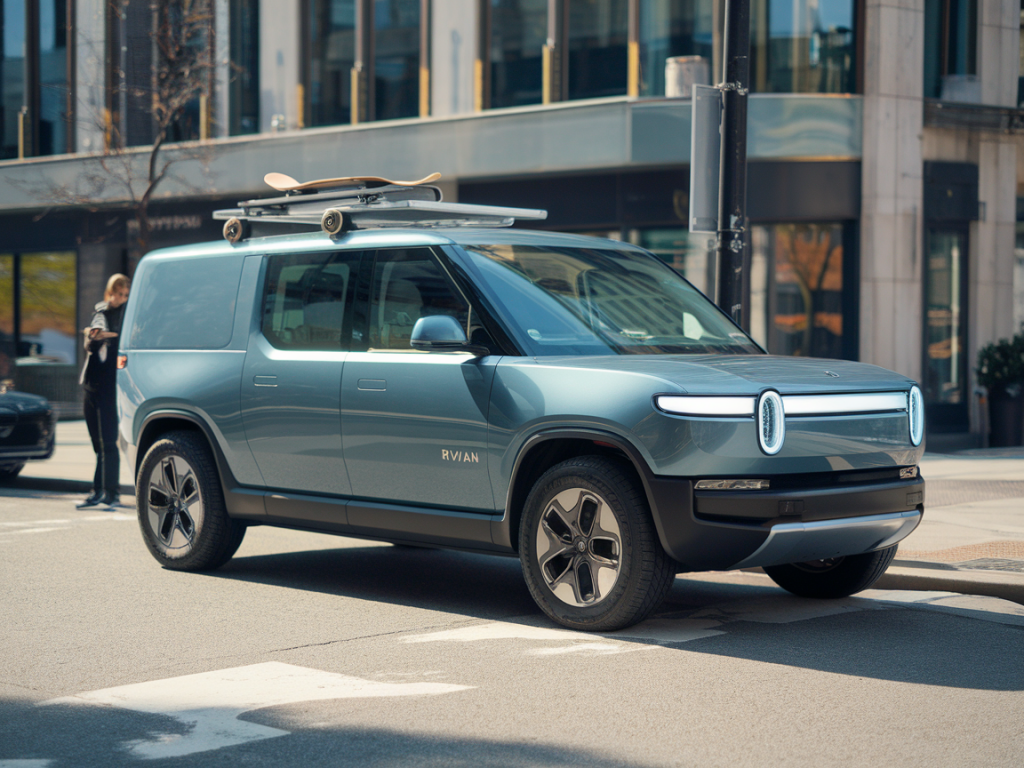
As someone who's spent years tracking the shifting landscape of mobility, I find myself particularly fascinated by the idea that vehicle architecture alone could tip the economics of last-mile logistics. Rivian's skateboard platform—essentially a flat battery-and-drivetrain chassis designed to receive various topside bodies—promises the kind of production and operational flexibility that could shave costs for electric commercial vans. But promises and reality are different beasts. In this piece for Mobility News (https://www.mobility-news.uk), I want to walk you through the factors that determine whether Rivian's approach can truly make electric vans cost-effective for last-mile fleets.
What's special about the skateboard platform?
The skateboard concept isn't new, but Rivian has executed it with a clear commercial-vehicle mindset. The platform integrates the battery pack, motors, suspension, steering, and braking into a single, flat unit. This means multiple body configurations—cargo vans, box trucks, shuttle buses—can be built on the same underlying architecture.
Why that matters economically:
- Shared development cost: One platform means R&D investments are amortized across a broader range of vehicles.
- Faster time-to-market: OEMs or upfitters can design new bodies without reengineering the drivetrain or battery layout.
- Manufacturing efficiency: A modular approach can simplify assembly lines and reduce per-unit manufacturing costs.
CapEx: Is the vehicle purchase cheaper?
Buying an electric van remains more expensive upfront than a diesel counterpart, mainly driven by battery costs and lower production volumes. In theory, a skateboard platform should lower the capital cost per vehicle because of the shared investments I mentioned earlier. In practice, the impact depends on volume.
If Rivian can scale production of the skateboard and place it under thousands of commercial bodies, the per-unit cost of the platform could fall substantially. But scaling depends on orders—commercial fleets are cautious and price sensitive. Early fleet pilots with Rivian-derived vans (or partnerships with body builders) will be decisive in demonstrating enough demand to unlock cost reductions.
OpEx: Where the economics really matter
For logistics operators, total cost of ownership (TCO) matters more than sticker price. Here are the main operational levers where an EV skateboard could change the equation:
- Energy costs: Electricity per mile is typically cheaper and less volatile than diesel, especially if fleets can use off-peak charging or onsite solar.
- Maintenance: EVs have fewer moving parts—no oil changes, fewer transmission issues—so maintenance costs can be lower.
- Utilization and modularity: The skateboard's ability to support different bodies could let operators redeploy the same chassis for different tasks, improving utilization rates.
- Down-time for conversions/upfits: Standardized platforms can speed up upfitting, reducing vehicle idle time during conversion to a delivery configuration.
That said, there are friction points. Battery degradation over time affects range and therefore route planning. Charging infrastructure constraints and power demand charges can erode projected energy savings. And if the skateboard platform is heavier than optimized single-purpose designs, it could reduce payload and efficiency.
Payload, range and route economics
One of the biggest questions I hear from logistics managers: does an EV van carry as much and go as far as my diesel van? Payload directly affects how many parcels you can deliver per trip. Range affects how many trips or recharges are needed.
Rivian's skateboard architecture allows batteries to be integrated into the floor, lowering the center of gravity and enabling a flat cargo floor—good for payload distribution and cargo volume. But battery weight is still significant. If payload drops because of heavy batteries, you could need more vehicles to maintain throughput—an immediate cost hit.
Conversely, if the skateboard is designed with optimized energy density and the vehicle's aerodynamics and drivetrain efficiency are strong, the range might meet typical urban last-mile needs. Many urban delivery routes involve short-range, stop-and-go cycles—conditions where EVs can be surprisingly efficient due to regenerative braking.
How important is the whole-vehicle-plus-infrastructure package?
One thing I've learned covering smart cities and fleet electrification is that no vehicle lives in isolation. The skateboard's benefit multiplies if it's sold as part of a package that includes:
- Fleet telematics and energy management: Smart route planning and charging scheduling cut operating costs.
- Charging solutions: Depot chargers sized to minimize demand charges and maximize uptime.
- Maintenance and service networks: Economical servicing through standardized components and trained technicians.
Rivian's commercial strategy—partnering with body makers, offering fleet services, or enabling third-party upfitters—will shape how fleets perceive the overall value. A skateboard without a viable ecosystem could limit adoption even if the hardware is excellent.
Real-world pilots and data: what I want to see
Talk is cheap, numbers matter. The fleet operators I've spoken to look for key metrics before committing at scale:
- Average energy consumption per mile on urban routes (including HVAC loads and stop-start cycles)
- Payload versus tare weight and its impact on how many stops a vehicle can serve
- Charging time and infrastructure costs allocated per vehicle
- Maintenance frequency and cost compared to incumbent diesel or hybrid vans
- Vehicle uptime percentage—how often the vehicle is operational for deliveries
Pilot programs that publish transparent TCO analyses over multiple seasons are the clearest path to convincing conservative logistics players. I want to see third-party fleet managers comparing skateboard-based vans from Rivian with other purpose-built electric vans (like the Ford E-Transit, Mercedes eSprinter, or startups such as BrightDrop) under the same operational conditions.
How does Rivian compare to other approaches?
There are two broad approaches to commercial EVs: adapt a passenger-vehicle-based platform to commercial use (what some legacy OEMs have done), or build dedicated commercial platforms (what startups and some OEMs are pursuing). The skateboard is kind of a middle ground: it's a highly modular base that can underpin multiple vehicle types.
Advantages over passenger-derived conversions:
- Purpose-designed for heavy batteries and commercial duty cycles
- Better packaging for cargo volume
Advantages over single-purpose commercial platforms:
- Flexibility for varied business models and upfits
- Potentially lower R&D cost per vehicle type
Ultimately, the right choice depends on fleet size and specialization. Large operators that run millions of last-mile stops might prefer highly optimized, single-purpose vehicles if those yield the best TCO. Fleets with mixed needs or smaller operators may value the skateboard's versatility.
Risks and bottlenecks that could blunt the skateboard's impact
Don't overlook systemic risks:
- Supply chain volatility: Battery raw material costs can swing and negate unit cost improvements.
- Charging infrastructure lag: Without reliable depot or urban charging, operational savings won't materialize.
- Regulatory and safety approvals: New architectures can face long homologation timelines in different markets.
- Upfitter integration quality: Poor upfits can reduce vehicle efficiency and increase maintenance.
These are not warnings against the skateboard concept, but reminders that vehicle architecture is only one piece of a complex puzzle.
Quick comparative snapshot
| Factor | Skateboard platform (Rivian) | Traditional diesel/commercial EV |
|---|---|---|
| Upfront cost | Potentially lower with scale | Diesel lower now; EV higher |
| Operational cost | Lower energy & maintenance potential | Higher fuel & maintenance for diesel |
| Flexibility | High—multiple bodies on same chassis | Often single-purpose |
| Infrastructure dependency | High—needs charging & energy management | Lower—but subject to fuel price volatility |
At Mobility News I cover the intersection of technology, software and transport systems. From that perspective, Rivian's skateboard is promising because it unlocks software-enabled fleet management and energy optimization at scale. But the real economic verdict will come from data—real-world TCO comparisons, published by fleets after sizeable pilots. Until then, the skateboard is an enabling technology with strong potential, not yet an economic silver bullet. What I care about next are the fleet case studies, the upfitter partnerships, and the charging strategies that turn platform flexibility into measurable savings.