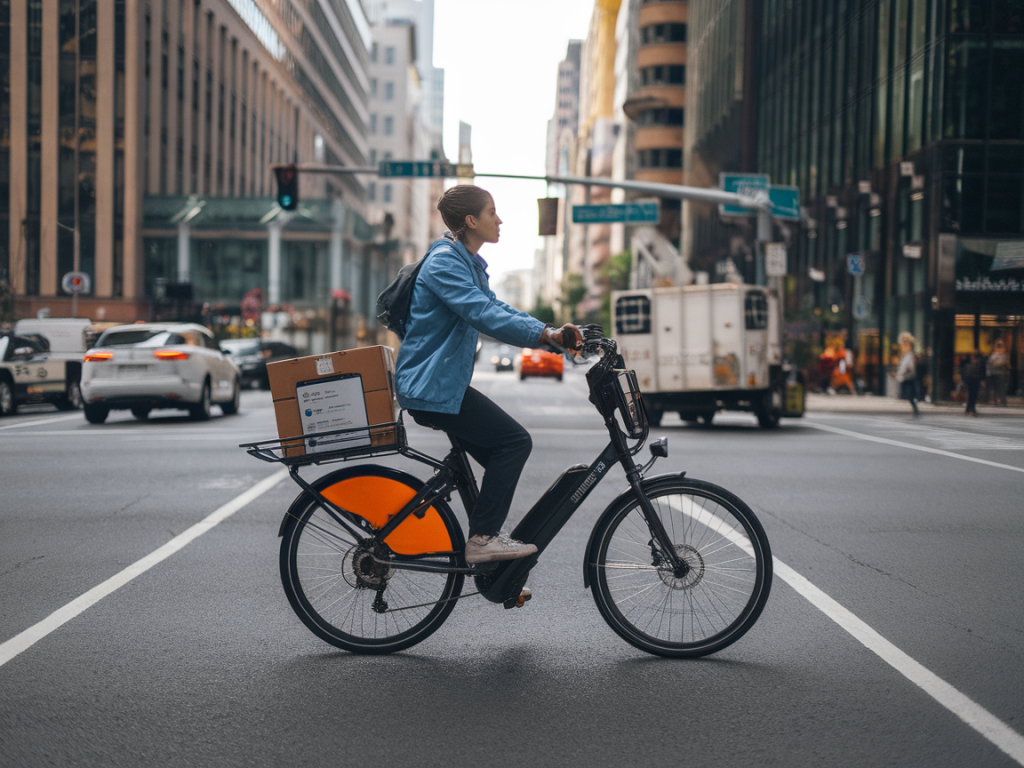
I’ve been thinking a lot about practical ways to reduce the cost and carbon footprint of last-mile delivery, and one model keeps coming back to me: citywide battery leasing for e-bike couriers. It’s simple on paper — operators or city authorities provide batteries as a service, rather than couriers buying and managing their own — but the implications ripple across economics, operations, and emissions in ways that could reshape urban logistics.
Why battery leasing matters for e-bike couriers
From conversations with riders and fleet operators, the pain points are clear: upfront cost of e-bikes and spare batteries, unpredictable battery lifetime, downtime for charging, and the hassle of managing degraded batteries. All of these increase operational costs and reduce the availability of bikes for deliveries. A battery leasing model transfers that complexity to a central provider who can optimize charging, maintenance and replacement at scale.
I see three main benefits right away:
Lower upfront costs: Couriers and gig workers no longer need to invest heavily in multiple battery packs to cover peak shifts.Higher utilization: Centralized management reduces downtime; batteries can be hot-swapped or rotated to match demand.Lifecycle optimization: A single provider can refurbish, repurpose (second-life storage), or recycle batteries more efficiently, reducing total environmental impact.How leasing changes last-mile costs
Let’s break down the cost elements of last-mile delivery for an e-bike courier and see how leasing shifts them.
Capital expenditures (CapEx): With ownership, riders or companies buy batteries (often 1–3 per bike). Leasing converts that CapEx into predictable operating expenses (OpEx) — a regular fee per battery or per-kilometer charge.Maintenance and replacement: Battery degradation is variable. Leasing pools the degradation risk: the provider schedules replacements and exploits economies of scale in repair and refurbishment. For operators, this reduces unexpected replacement costs.Operational downtime: Owning riders typically carry spare batteries or pause to charge. Leasing with a swap network or rapid charging hubs reduces downtime, increasing the number of deliveries per rider-hour, which lowers per-delivery costs.Network effects and pricing: A citywide provider can dynamically price batteries by time-of-day and location. That allows higher utilization during peak hours and discounted rates for off-peak charging, smoothing demand and reducing the need for oversized fleets.Simple cost comparison
To illustrate, here’s a simplified table comparing three cases: ownership (rider-owned), leasing (subscription per battery), and swap-network (per-swap fee). The numbers are illustrative but grounded in typical market figures for small European cities.
| Ownership (annual) | Leasing (annual) | Swap-network (annual) |
| Battery CapEx per bike | £400 (2 batteries) | £0 | £0 |
| Annualized battery cost | £100 | £200 (subscription) | £250 (per-swap fees) |
| Downtime cost (lost delivery hours) | £600 | £200 | £150 |
| Maintenance & replacement | £80 | £40 (included partly) | £30 |
| Total annual battery-related cost | £780 | £440 | £430 |
These numbers show leasing and swap networks can significantly reduce total costs when downtime is taken into account. The real value is operational — a courier who spends less time charging or swapping can make more trips per shift.
What leasing does to emissions
Reducing emissions is not just about swapping an internal combustion van for an e-bike; it’s about the full lifecycle. I look at emissions across three stages: production, use-phase, and end-of-life.
Production: Producing batteries is carbon-intensive. Leasing concentrates purchasing power in fewer hands, enabling providers to source lower-carbon batteries (e.g., from factories using renewable energy) and invest in more durable chemistries that reduce per-kilometer embodied emissions.Use-phase: Centralized charging facilities can optimize when and how batteries are charged. Charging during off-peak hours or when local renewable generation is high reduces grid carbon intensity per kWh. Providers can also implement smart charging and vehicle-to-grid (V2G) strategies to smooth demand and soak up renewables.End-of-life: A leasing provider is incentivized to maximize battery lifespan and manage recycling and second-life reuse (stationary storage) — processes that are often neglected when batteries are individually owned and discarded.Empirically, for urban e-bike fleets, I estimate lifecycle emissions per km could drop by 10–30% under a well-managed leasing scheme compared to fragmented ownership. The lower bound reflects improved utilization and centralized charging; the upper bound assumes low-carbon charging and robust second-life practices.
Operational models and real-world examples
There are several implementation pathways, and some companies already provide pieces of this puzzle:
Battery subscription: Similar to Swapfiets for bikes, users pay a monthly fee that covers batteries, maintenance, and replacements. This model fits independent couriers who want stability without infrastructure dependence.Swap-stations: Gogoro-style networks where riders swap depleted packs for charged ones at kiosks. This minimizes downtime and is effective in dense urban cores.Fleet-managed leasing: A delivery company outsources battery provisioning to a specialist that handles charging, replacement, and recycling. This combines leasing with logistics integration.Gogoro (scooters) and companies like Sun Mobility (India) and Swapfiets (bikes) illustrate parts of the model. For couriers, a hybrid approach — subscription for casual riders, swap-stations for high-pace urban corridors, and fleet-managed contracts for large operators — can cover varying needs.
Challenges and what city planners should watch for
Leasing sounds promising, but implementation carries challenges I’d flag for city planners and operators:
Infrastructure siting: Swap or charging hubs need strategic placement to avoid deadhead miles and to be accessible where couriers operate.Standardization: Without common battery packs or interfaces, swap networks will be fragmented. Standards matter — otherwise you end up with vendor lock-in and limited scale benefits.Grid impact: Concentrated charging increases local electricity demand. Smart charging, local storage, and renewable integration are necessary to prevent fossil-fuel peaker plants from negating emission gains.Worker protections and pricing fairness: Leasing must avoid predatory pricing. Contracts should be transparent and consider income variability for gig workers.Questions couriers and operators often ask
When I talk to riders, I hear practical questions. Here are a few, with concise answers:
Will I save money? Often yes, particularly if you currently buy multiple batteries or lose income due to charging downtime. Savings depend on subscription price, swap fees and your daily range.What about reliability? Centralized providers can offer higher reliability through redundancy and professional maintenance — but only if coverage density is sufficient.Can leasing be green? Absolutely, if providers commit to low-carbon charging, durable batteries, and end-of-life strategies. Cities can incentivize these practices through procurement standards.For city leaders and platform operators, the choice is strategic. Supporting a leasing ecosystem — either through public-private partnerships, incentives for swap kiosks, or standardization efforts — can reduce last-mile costs and shrink emissions simultaneously. For couriers, it can mean more deliveries, less downtime, and predictable expenses. I find that intersection of economic and environmental benefit compelling: a classic win-win when executed with foresight.